
Last updated September 20, 2026
Free on-site gate assessment - hinges, posts, and your LiftMaster or Nice gate operator checked before anything is quoted
The assessment is free and the quote is the invoice.


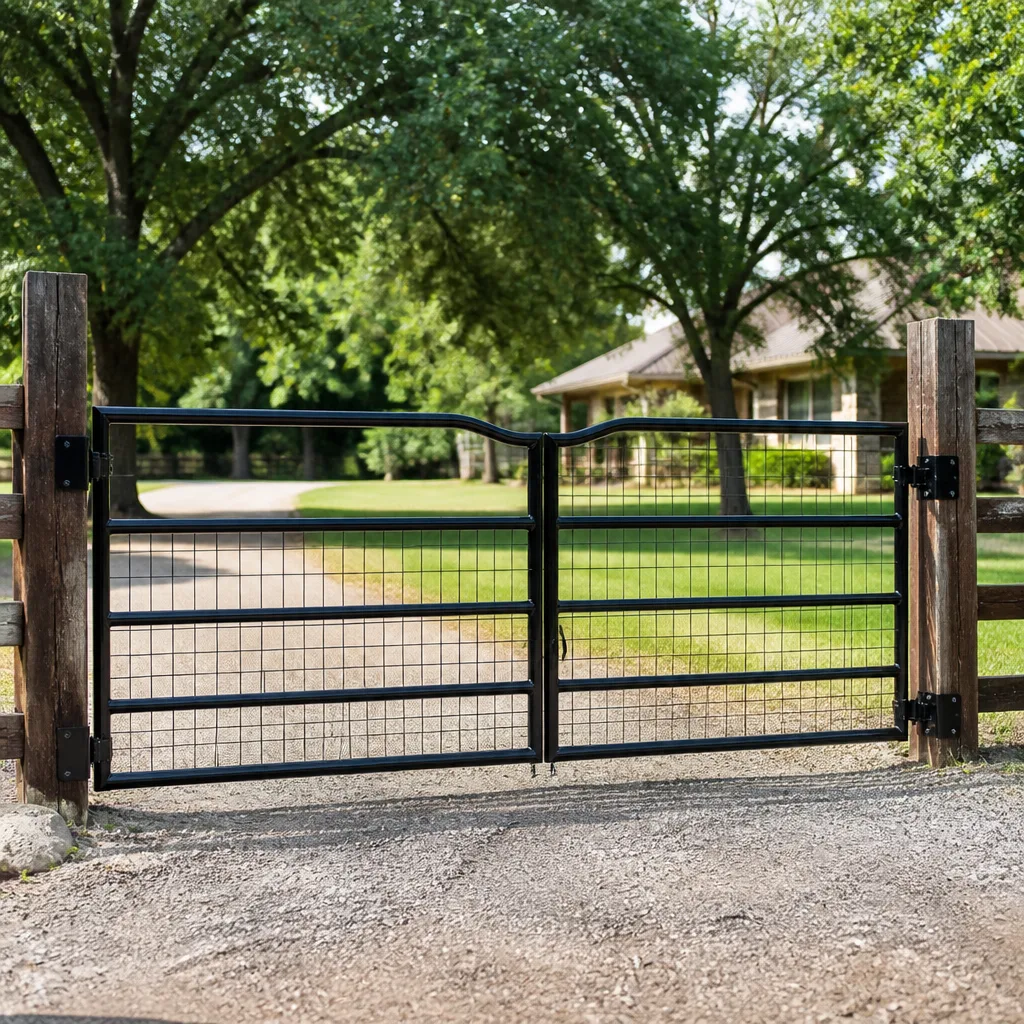
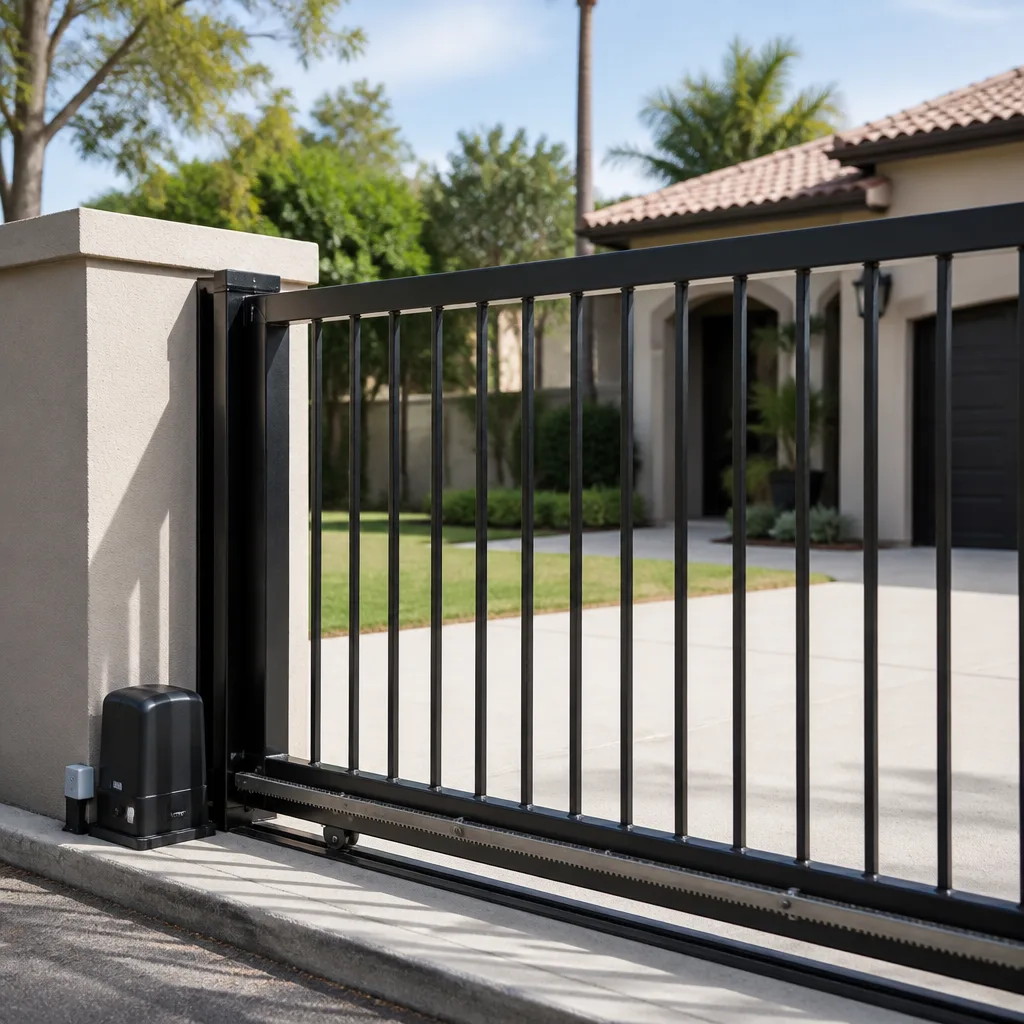
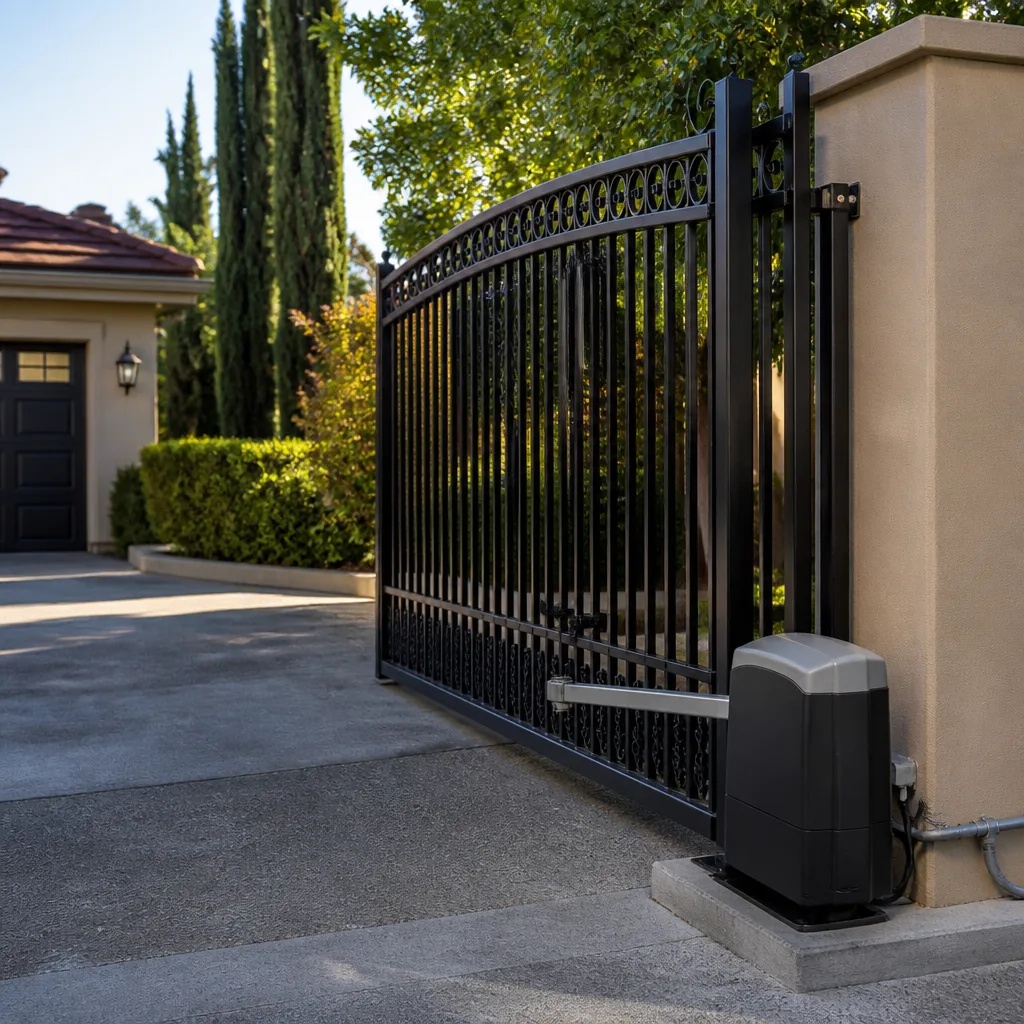
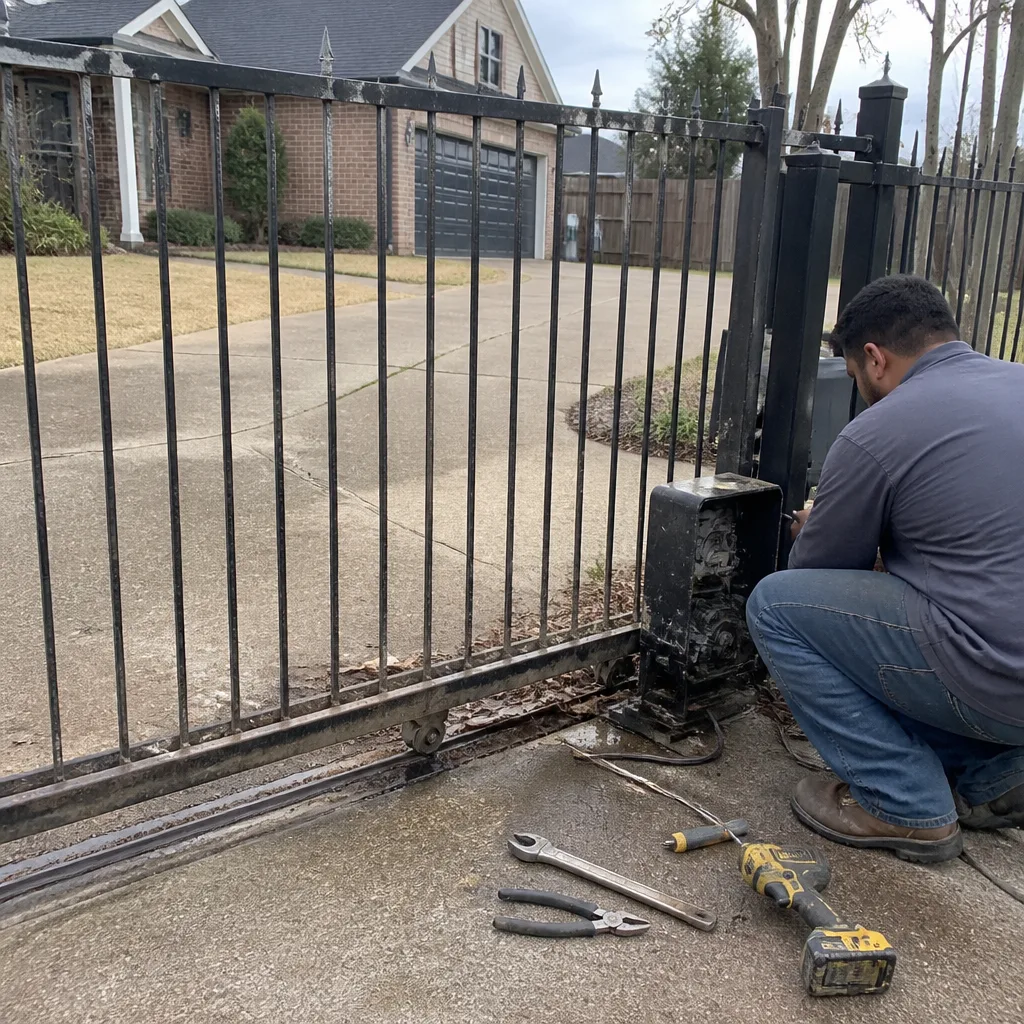 Before
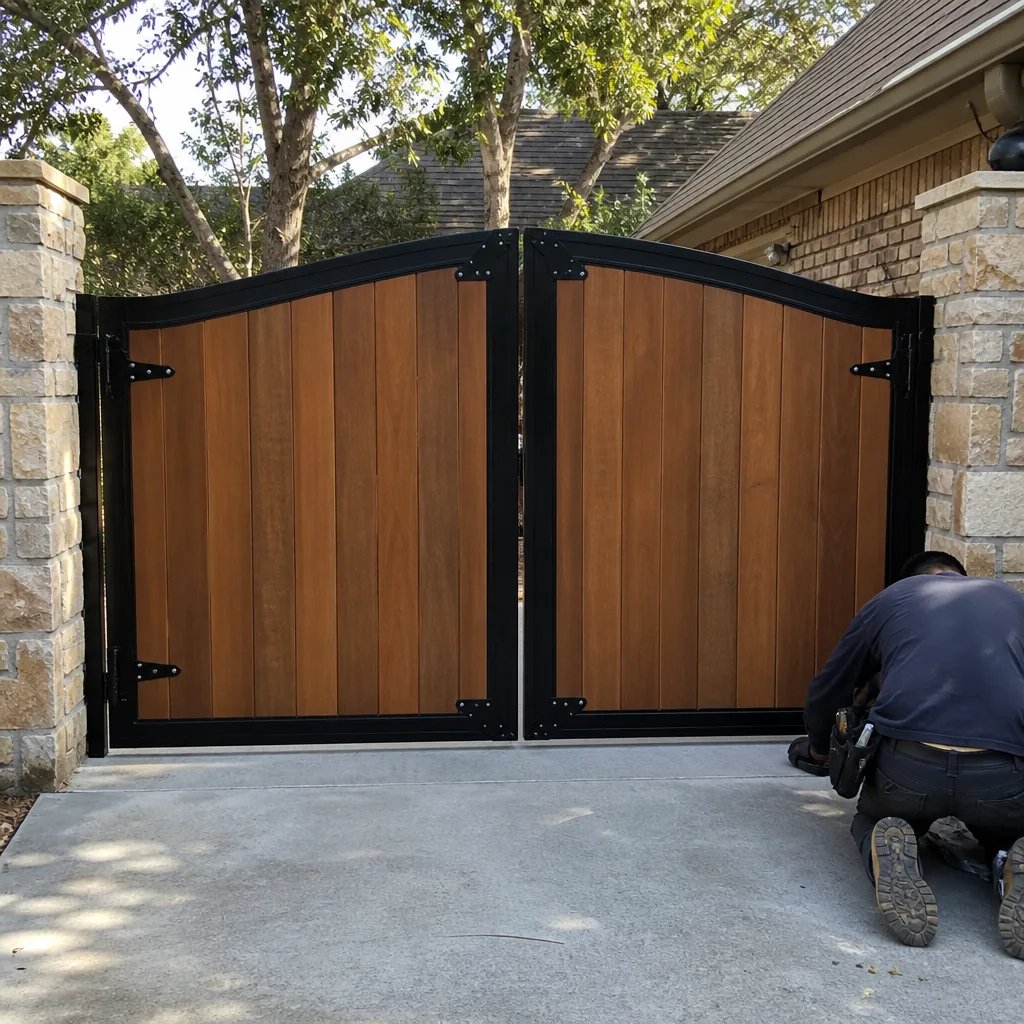 After
After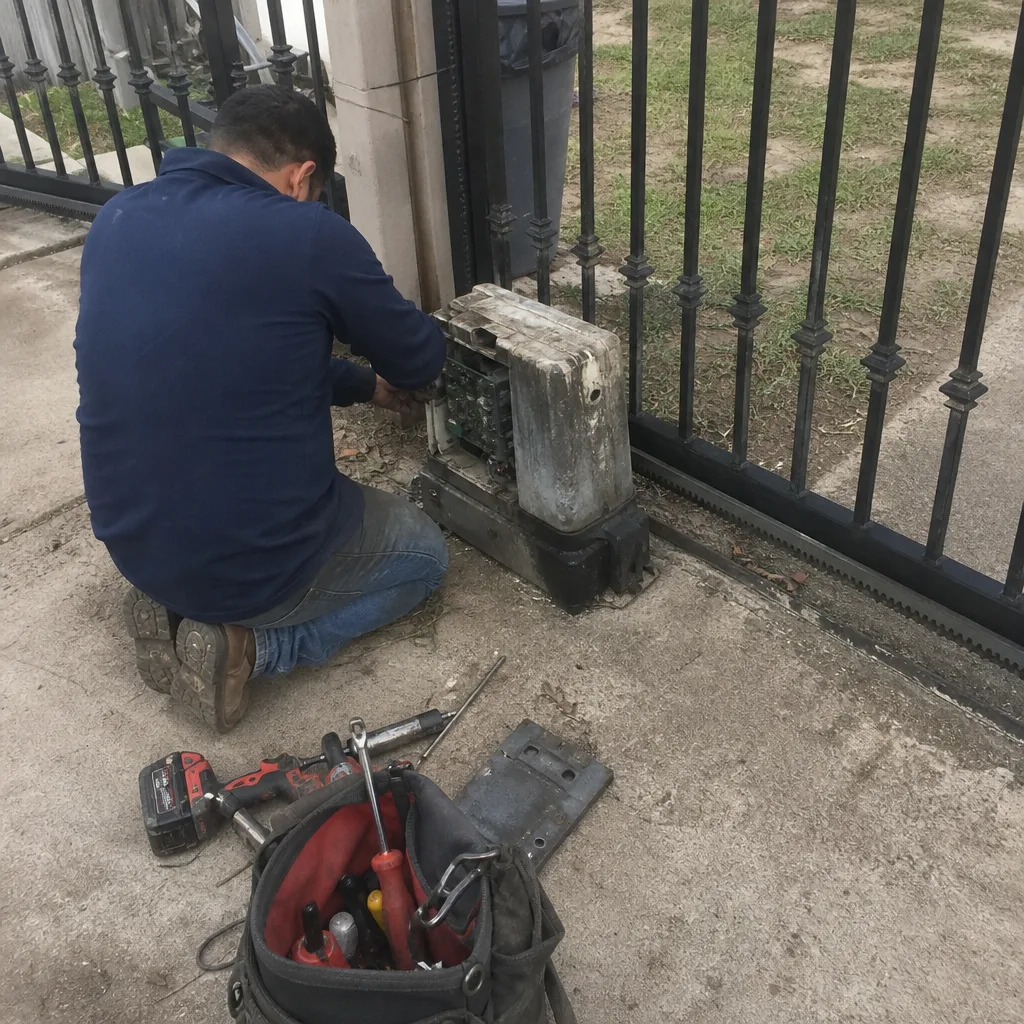 Before
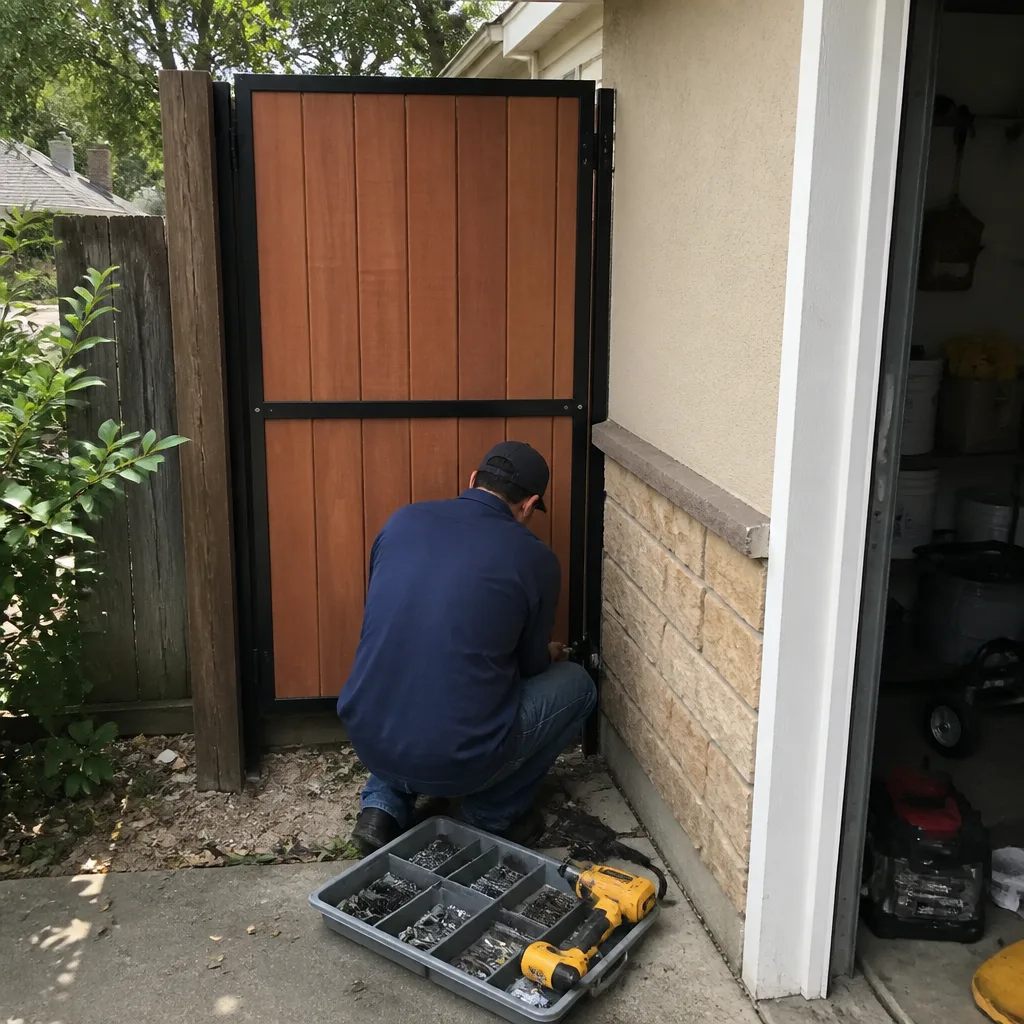 After
After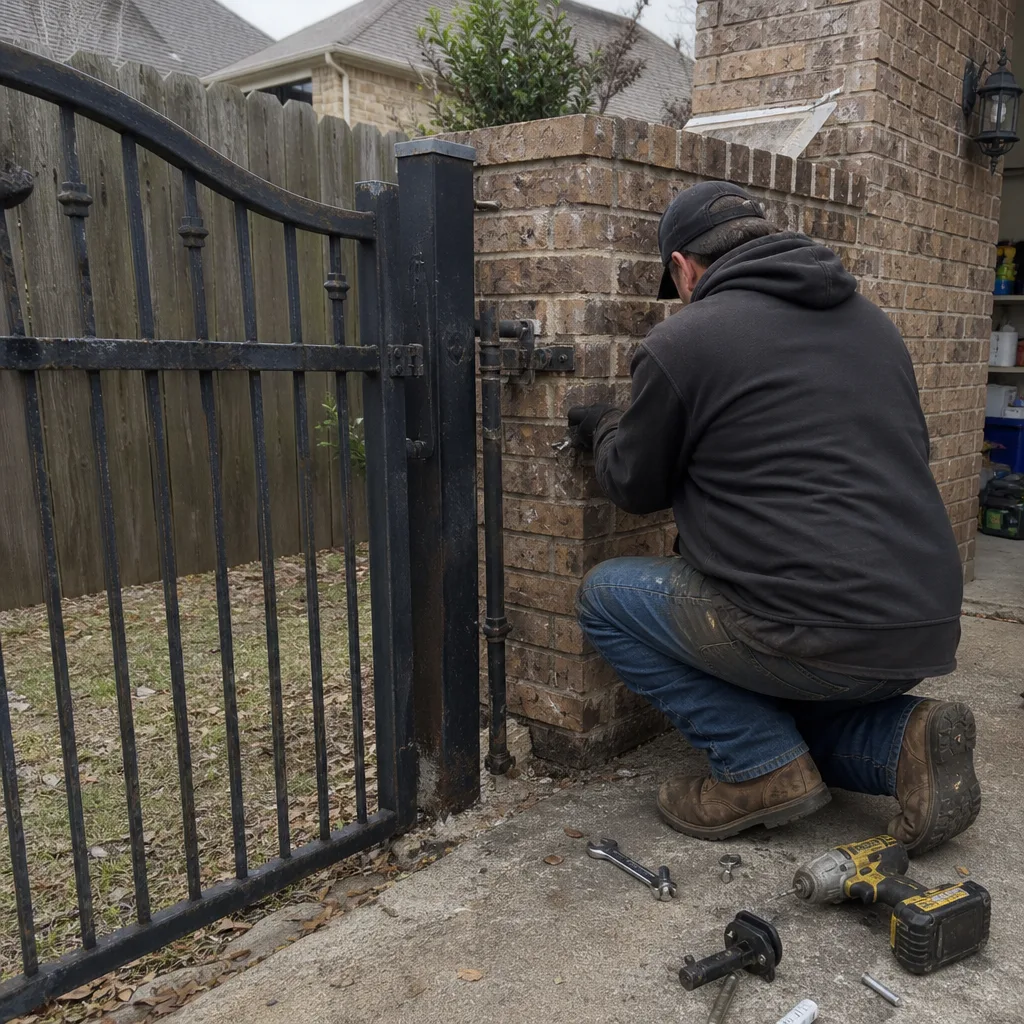 Before
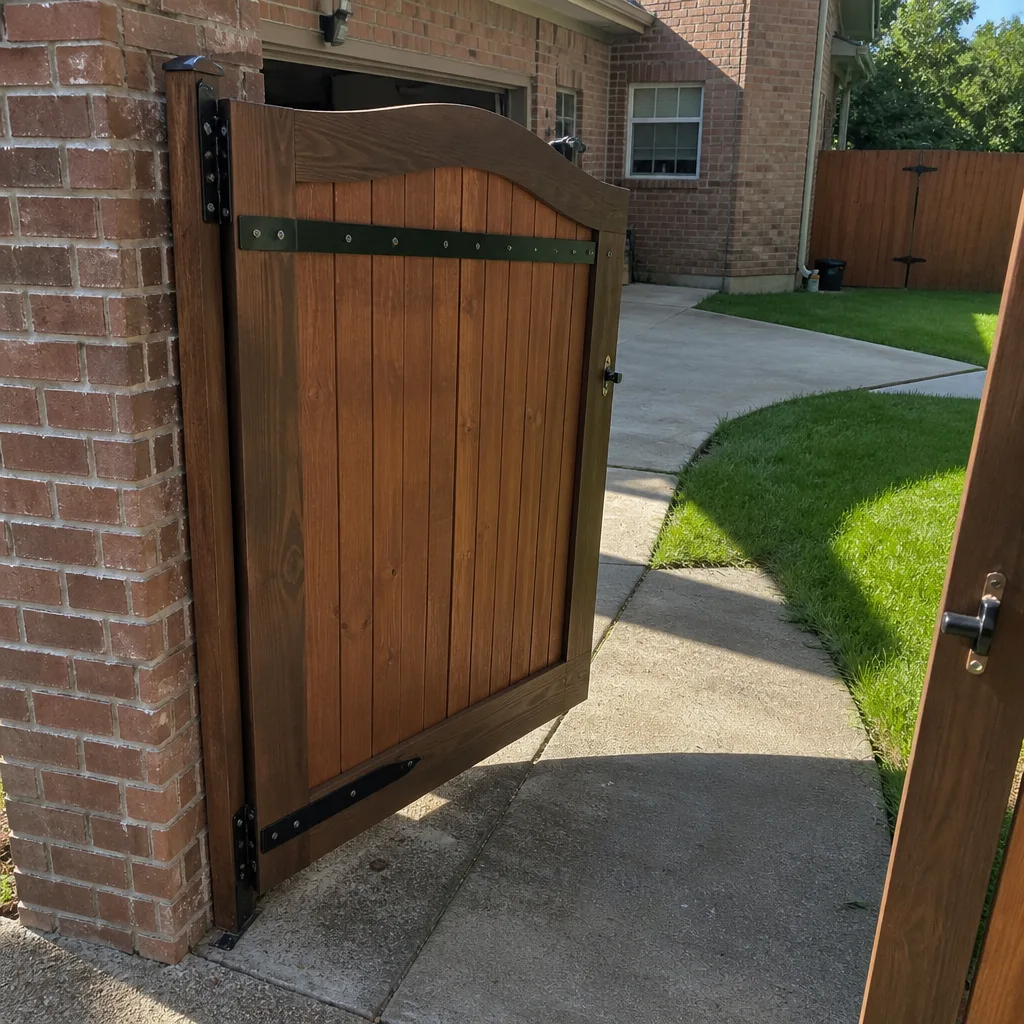 After
AfterGate Repair Warning Signs: A Murphy Homeowner’s Reference Guide
A gate that hesitates for two seconds before moving is not warming up. It is drawing excess current while the operator fights a mechanical problem, and that current is shortening the control board’s life every single cycle. Most gate failures in Murphy announce themselves weeks or months before the gate actually stops working, through changes in sound, speed, alignment, and response time that homeowners notice but don’t know how to read. This guide names each warning sign, identifies the component it points to, and tells you how long you typically have before a nuisance becomes an emergency. If you own an automatic driveway gate in Murphy, the next ten minutes will change how you listen to it.
Quick Answer
Gate repair warning signs in Murphy fall into four observable categories: hesitation or slow response from the operator, grinding or scraping sounds during travel, sagging or leaning of the gate leaf itself, and intermittent stopping or reversing mid-cycle. Each points to a specific mechanical or electrical problem, and most can be fixed in one visit if caught before the component fails completely. Hesitation points to the operator or control board, grinding points to the wheels or hinge hardware, sagging points to the post or hinge weld, and intermittent stopping points to the safety sensors or limit switches.
Table of Contents

- Hesitation on Start: What Two Seconds of Delay Actually Means
- Grinding, Scraping, and Metal-on-Metal Sounds
- Intermittent Stopping and Mid-Cycle Reversals
- Slower Travel Speed Over Time
- Sagging, Leaning, and the Murphy Clay-Soil Problem
- Photo-Eye and Safety Sensor Warning Signs
- Symptom-to-Component Map: Reading Your Gate Like a Technician
- How to Document a Warning Sign So a Technician Can Actually Use It
- Scheduled Appointment vs. Same-Week Service: How to Decide
- Common Mistakes to Avoid
- When to Call a Professional
- Frequently Asked Questions
- The Bottom Line
BeforeAfterHesitation on Start: What Two Seconds of Delay Actually Means
When you press the remote or keypad and the gate pauses before moving, you are watching the operator draw current against resistance. That resistance is mechanical, not electronic. The motor is being asked to overcome a bind in the hinge, a wheel dragging in its track, or a gate leaf that has shifted slightly out of square. The pause is the moment the operator’s capacitor or control board is working hardest, and that working-hard moment is what shortens the life of the electronics.
In our experience across Murphy, hesitation on start is the single most common warning sign homeowners report, and the one most often dismissed. For a deeper look at what to listen for, see our guide on Seasonal Gate Repair Care for Murphy: Year-Round Homeowner’s Guide. The gate still opens. It still closes. So the two-second delay doesn’t feel like a problem. But a healthy operator on a properly aligned gate should begin moving within a fraction of a second. Anything longer means the system is compensating for a mechanical fault.
The most common causes we find on Murphy gates:
- Binding hinge – a hinge pin that has worn or a hinge plate that has pulled slightly away from the post, forcing the motor to work against friction at the pivot point.
- Dragging wheel or roller – a gate wheel that no longer spins freely, so the leaf is being pulled across concrete or gravel instead of rolling.
- Low battery or failing capacitor on the operator – the motor starts but the initial torque isn’t there, producing a lag before movement.
- Out-of-square gate leaf – the leaf has shifted enough that the latch side drags on the ground or catches on the receiver post.
If you catch hesitation early, the repair is usually straightforward: a new hinge bushing, a freed-up wheel, a capacitor replacement. If you let it go, the control board absorbs the current spike cycle after cycle until it fails, and then you are replacing both the mechanical part and the electronics. That is the difference between a $150 hinge repair and an $800 operator replacement. For anyone looking at Gate Repair in Murphy, hesitation is the warning sign with the best cost-to-catch ratio.
Grinding, Scraping, and Metal-on-Metal Sounds
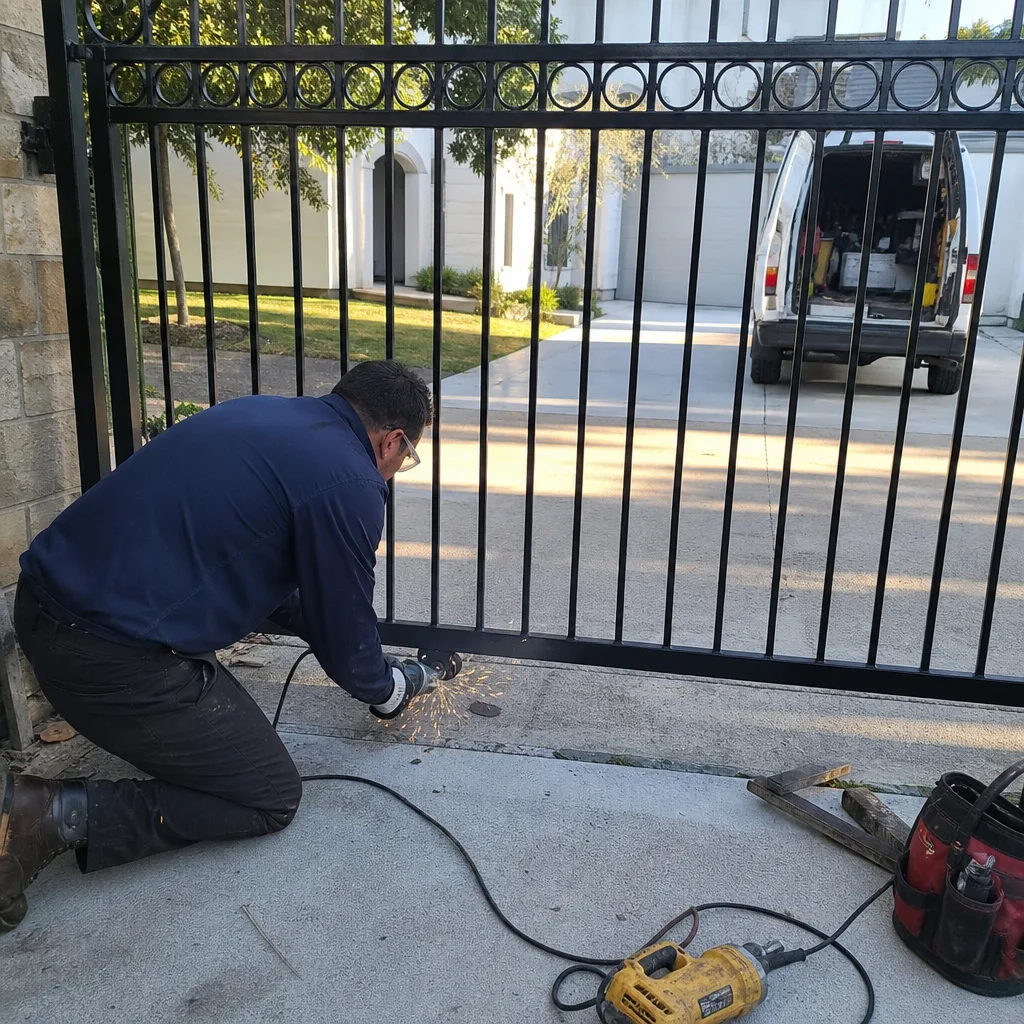
A gate in good mechanical condition makes two sounds: the low hum of the motor and the soft roll of the wheels. Anything beyond that is diagnostic information. Grinding is metal wearing against metal. Scraping is metal wearing against stone or concrete. Both are telling you something specific about where the wear is happening.
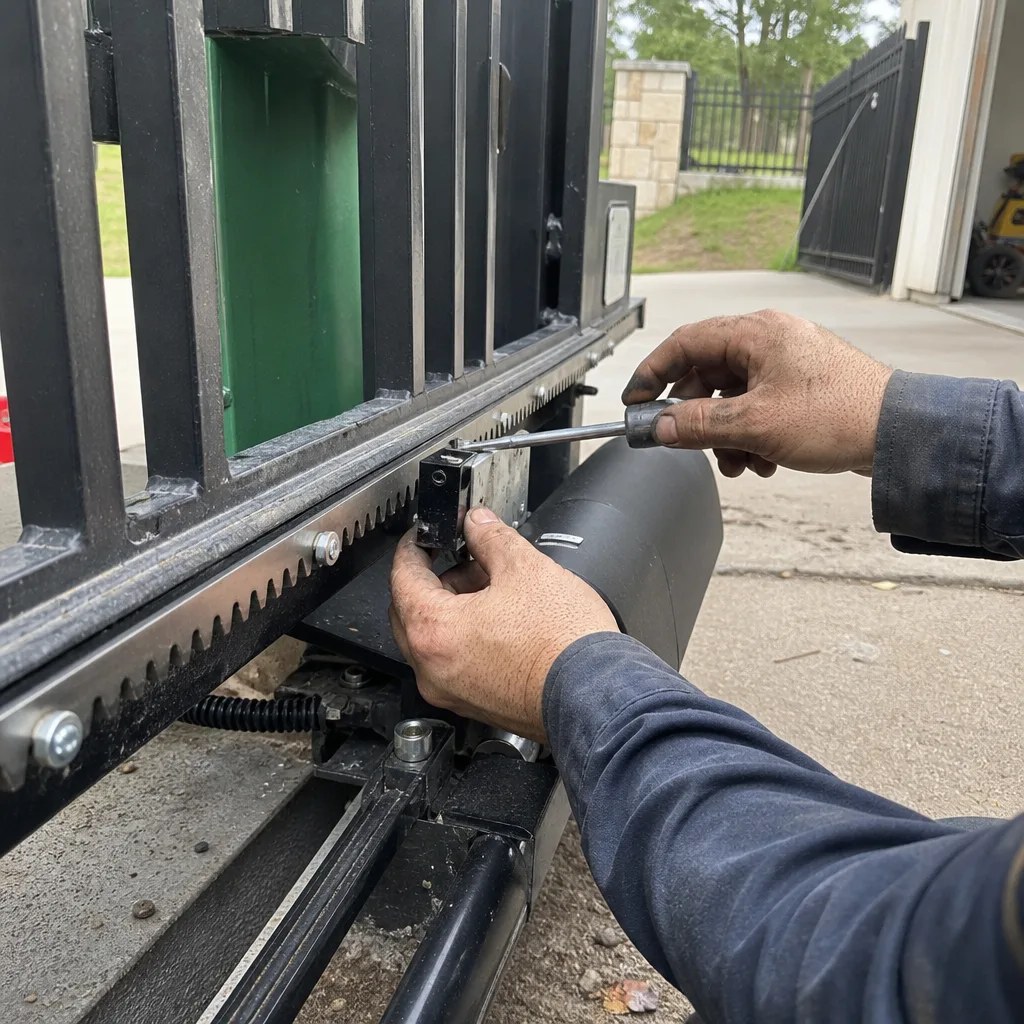
Grinding from the operator housing usually points to a failing gear inside the drive mechanism. Most residential swing gate operators made by DoorKing, Elite, Ghost Controls, and Mighty Mule use a gear train to convert motor rotation into arm movement. When those gears lose lubrication or teeth begin to wear, the operator gets louder by the week. It is a mechanical sound, not an electrical one, and it does not fix itself.
Scraping at the gate leaf level is almost always a wheel, roller, or the bottom edge of the gate dragging on the driveway. In Murphy, where driveways settle with the clay soil, we see this pattern constantly: the concrete slab at the gate opening shifts a half inch, the gate that used to clear by a full inch now drags by a half inch, and the homeowner hears it every day without connecting the sound to the movement of the soil beneath the driveway.
What to listen for:
- Rhythmic grinding that matches gate speed – one component rotating: a wheel, a gear, a roller. The rhythm tells you it’s rotational.
- Continuous scraping throughout travel – something is dragging the whole length of the gate path. Usually the bottom edge or a mounting bracket.
- Squealing that goes away when the gate is wet – a dry bushing or unlubricated hinge pin. Water temporarily lubricates it.
- A sharp click or snap once per cycle – a cracked weld, a loose bracket, or a chain link catching. This one needs attention fast because it can be a fatigue crack propagating.
One clarification: some operators are simply louder than others. A Ghost Controls opener sounds different from a DoorKing opener by design. What you are listening for is a change over time, not the baseline sound. If the gate sounds the same this month as it did last year, you are fine. If it’s louder this month than last month, something is wearing.
Intermittent Stopping and Mid-Cycle Reversals
An automatic gate is designed to stop or reverse under two conditions: the safety system detects something in the path, or the operator’s internal logic detects an obstruction. When the gate stops or reverses with nothing visible in the way, you are looking at one of three things: a misaligned photo-eye, a limit switch that has drifted out of range, or a control board that is misreading the motor’s current draw.
The photo-eye, which is the infrared beam mounted near the ground on both sides of the opening, is the most common culprit. If the beam is interrupted or misaligned by even a small angle, the system sees an obstruction where none exists. In Murphy, the beam housings get knocked out of alignment by wind, by landscape crews, and by the same clay-soil movement that shifts everything else attached to the ground. A beam that was aligned perfectly last spring can be off by two inches by October, not because anyone touched it but because the soil under the post moved.
The other common cause of intermittent stopping is a limit switch drifting out of adjustment. The limit switch is the component that tells the operator where “open” and “closed” positions are. When it drifts, the operator may think it has reached the limit early, or it may overshoot and then jerk back. The result is a gate that opens halfway, pauses, then continues, or a gate that starts to close and then reverses as though it hit something it never touched.
What intermittent stopping tells you:
- Stops at the same spot every time but with nothing in the path – photo-eye alignment or a limit switch issue. Same spot = a sensor, not a mechanical bind.
- Stops at random spots along the travel – more likely the control board misreading current draw, especially if the gate hesitates first.
- Reverses only when closing, never when opening – the safety edge or photo-eye is triggering during closure, which is when the obstruction detection is armed. Points to alignment, not the board.
- Stops only on cold mornings or after rain – moisture or temperature-related. In Murphy, condensation inside a photo-eye housing after a rainy week is a real and repeating pattern.
Intermittent problems are the most maddening for homeowners because the gate works when the technician arrives and fails ten minutes after they leave. This is exactly why written documentation matters. A video of the failure, taken at the moment it happens, tells a technician more in thirty seconds than a verbal description ever will.
Slower Travel Speed Over Time
Your gate has a normal operating speed. You know it intuitively even if you’ve never measured it. When the gate starts taking noticeably longer to open or close, something in the system is adding resistance or reducing output power. The symptom is gradual, and that’s precisely why most homeowners miss it until the gate is crawling.
Speed changes break down into two categories. The first is the operator losing output power: a weakening capacitor, a motor with worn brushes, or a battery that no longer holds a full charge. In these cases the gate slows down uniformly, and the motor often sounds different too, a lower-pitched or labored hum. The second category is added mechanical resistance: hinges getting tighter, a wheel that’s no longer rotating, or a gate leaf that has shifted into contact with the driveway. In these cases the gate may slow down unevenly, moving fine at one point in the cycle and laboring at another.
Here’s the diagnostic detail that separates the two. Watch the gate at three points: the first six inches of travel, the middle of the swing, and the last foot before the closed position. A mechanical resistance problem shows up at a specific point in the arc. An electrical power problem shows up everywhere. That one observation, made with no tools, tells a technician whether to start at the hinges or start at the control board.
For a homeowner deciding how urgently to act, a slow gate is one of the few warning signs that genuinely allows a scheduled appointment rather than an emergency call. A slow gate is not about to fail catastrophically. But it is working harder every cycle, and that wear is cumulative. If you catch slow speed early, the fix is often simple: a hinge adjustment, a wheel replacement, a new capacitor. If you wait until the gate stops moving entirely, the repair scope expands. You can get any number of Gate Motor & Opener in Murphy issues repaired, but the bill is always smaller before the component fails completely.
Sagging, Leaning, and the Murphy Clay-Soil Problem
Murphy sits on expansive clay soil: soil that swells when wet, shrinks when dry, and moves enough to shift concrete slabs, fence posts, and gate posts by fractions of an inch per year. That movement shows up in gate hardware in specific, observable ways. If you know what you’re looking at, you can see the soil’s effect on your gate months before anything breaks.
The warning signs unique to this environment:
- Uneven gap at the latch side – the gap between the gate leaf and the receiver post is wider at the top than the bottom, or vice versa. The post has moved. The gate didn’t bend; the ground under the post shifted.
- Drag marks on the driveway – a curved scratch or worn path in the concrete where the gate swings. The leaf is no longer clearing the surface because the post has settled or leaned.
- Post lean progression – stand behind the gate post and sight down it against the fence line. A lean of a few degrees may be barely visible from the front but obvious from the side. Take a photo and compare it to a photo from six months ago. Movement is the warning sign, not the absolute angle.
- Hinge gap opening up – the top hinge plate pulling away from the post or the leaf. This is the hardware surrendering to the post’s movement.
Clay-soil movement in Murphy is seasonal. The heaviest movement happens at the end of a wet period or at the end of a dry period, not in the middle. After a long wet spring, the soil swells and the post can lift or lean. After a dry August, the soil contracts and the post can drop. Either direction creates misalignment between the leaf and the operator, and misalignment is what turns a smoothly operating gate into one that grinds, hesitates, or stops mid-cycle.
A sagging gate is not cosmetic. A gate that’s out of square puts a side load on the hinges and a diagonal load on the operator arm, and every cycle chips away at the hardware’s fatigue life. The repair is straightforward: reset or reinforce the post, re-square the leaf, and sometimes add a weld brace or a gusset plate at the hinge. It’s standard Vance Gate Repair Murphy home work, and it’s more common in this specific soil than in almost any other market we’ve seen.
Photo-Eye and Safety Sensor Warning Signs
The safety system on your gate is the photo-eye, the infrared beam that stops or reverses the gate if something crosses the path while it’s moving. And on many installations, there is also a safety edge, a pressure-sensitive strip on the leading edge of a slide gate or swing leaf that triggers when it makes contact with an obstacle. Both are required on modern installations, and both are the top source of false triggers and phantom stops.
A misaligned photo-eye is often visible if you know what to look for. The photo-eye is the pair of small boxes, one on each side of the gate opening, mounted low to the ground. One is the transmitter, one is the receiver, and a small LED on the receiver indicates whether the beam is reaching it. On some brands, a solid light means aligned and a blinking light means misaligned. On others it’s the opposite. The point is the light tells you something, and if you notice the gate behaving strangely, checking that light is the fastest first step.
What the sensors are telling you:
- Gate reverses only when closing and only in one specific spot – the photo-eye beam is being broken at that point, usually by a plant, a piece of landscaping, or a reflector that has drifted into the beam path.
- Gate reverses at random points along the closing travel – the beam housings are loose and moving in the wind, or the wiring connection at one of the housings is corroded and intermittently open.
- Gate reverses on bright sunny days but works at night – direct sunlight hitting the receiver can wash out the infrared signal on some brands. This is a photoelectric interference pattern that technicians see on south-facing gate openings.
- Gate stops at the same spot during daylight hours only – a shadow pattern or a reflective surface, like a parked car or a utility box, is confusing the receiver.
Sensor problems are among the least expensive to repair but the most frustrating to live with because they are intermittent and environment-dependent. If you can, document the conditions: time of day, weather, sun angle, whether the gate was hit by a landscape crew recently. A technician who shows up with that information can diagnose the problem in minutes instead of waiting for it to reproduce.
Symptom-to-Component Map: Reading Your Gate Like a Technician
Here is the condensed version of everything above. When you notice a warning sign, this map tells you which component is talking to you and what the message is.
- Hesitation on start – Operator drawing excess current against mechanical resistance. Check: hinge binding, wheel drag, out-of-square leaf, failing capacitor. Typical time to failure: weeks to months if a bind; weeks if a capacitor.
- Grinding from the operator housing – Drive gear wear inside the operator. Check: gear lubrication, gear tooth condition. Typical time to failure: weeks once the sound becomes consistent.
- Scraping along the driveway – Gate leaf dragging on the surface, usually from post settlement in Murphy clay soil. Check: bottom edge clearance, post plumb. Typical time to failure: months, but the leaf is taking fatigue damage the whole time.
- Intermittent mid-cycle stop or reverse – Safety sensor or limit switch. Check: photo-eye alignment, beam obstruction, limit switch drift. Typical time to failure: unpredictable, and this is the one that strands you outside the gate at the worst time.
- Slower travel speed, uniform – Operator output power dropping. Check: capacitor, battery condition, motor brushes. Typical time to failure: weeks to months, with progressive slowdown.
- Slower travel speed, uneven – Mechanical resistance at a specific point in the arc. Check: hinge, wheel, track alignment. Typical time to failure: depends on severity, but the resistance is causing wear every cycle.
- Gate reverses only in sunlight or only in wind – Photo-eye interference. Check: sun angle on the receiver, housing stability. Typical time to failure: not a failure, a nuisance, but it disables the safety function intermittently.
- Uneven latch gap or visible post lean – Post movement from clay-soil expansion. Check: post plumb, gate square, hinge gap. Typical time to failure: months, but the repair cost increases the longer the misalignment persists.
One note on interpretation. These categories overlap in real life. A gate that hesitates and grinds and scrapes is telling you three things at once, and they are usually connected: the post moved, the gate dragged, the drag wore the hinge, the worn hinge made the operator work harder, the harder work overloaded the control board. Treating one symptom without checking the others is how repairs come back a month later with the same problem in a different location.
How to Document a Warning Sign So a Technician Can Actually Use It
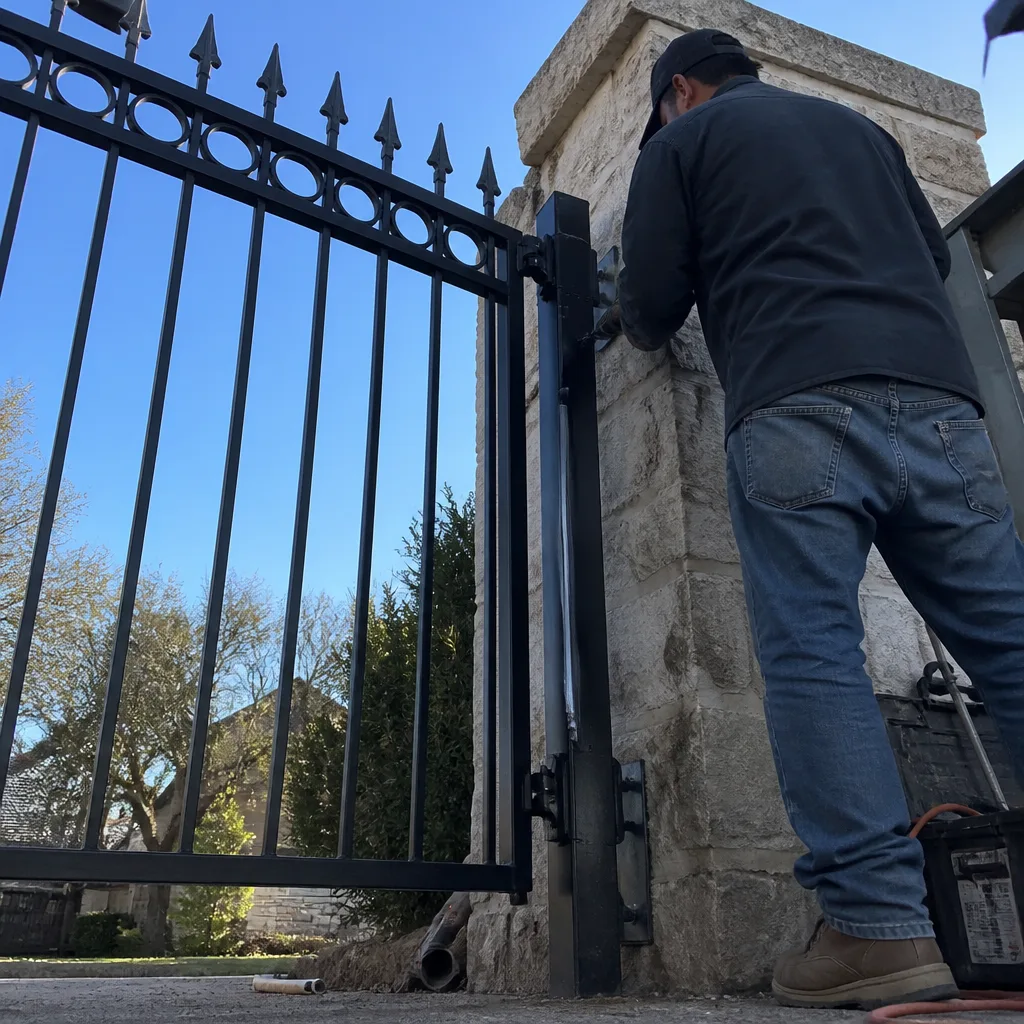
When a customer calls us with a gate problem, the quality of their documentation determines how fast we can diagnose it. A homeowner who says “it’s making a noise” sends a technician out to reproduce a symptom that may not show up on command. A homeowner who says “here’s a thirty-second video of the gate hesitating this afternoon, and it does it every time after the gate sits for more than an hour” gives us a diagnosis before we ever drive to the property.
Here is the documentation method that actually helps:
- Take video, not audio. Video of the gate moving captures the speed, the hesitation point, the sound, and the visual alignment all at once. Thirty seconds is enough. Start the video before you press the remote, and keep it rolling until the gate completes the full cycle.
- Note the conditions. Time of day, temperature, recent rain, whether the gate has been sitting closed for hours or just cycled. A gate that hesitates only when cold is a different problem than one that hesitates every cycle.
- Note the pattern. Does it happen every time, or only after sitting, or only on the first open of the morning, or only when the sun is hitting the photo-eye? The pattern is diagnostic information on its own.
- Photograph the visible evidence. The drag mark on the concrete, the uneven gap at the latch, the post that looks tilted in the photo. Take the photo from the side, not straight on. Side angles reveal lean that front angles hide.
- Keep a log if the problem is intermittent. Date, time, what happened, what the gate did. Three entries over two weeks beat a hundred words of verbal description.
This is the same habit that runs through everything at Gate Installation in Murphy: what was found, what was set, what was replaced, and a photo of it. When you hand a technician a documented warning sign, you are saving yourself diagnostic time and diagnostic guesswork, and that shows up in the bill.
Scheduled Appointment vs. Same-Week Service: How to Decide
Not every warning sign is an emergency. Some are a schedule-it-when-convenient situation. But a few are genuinely time-sensitive, and the difference matters because a gate that fails completely is a gate that leaves you either unable to leave your property or unable to secure it.
Warning signs that can wait for a scheduled appointment:
- Uniform slower speed with no other symptoms. The gate is working hard, but it’s working.
- Mild scraping on the driveway that has been present for weeks and hasn’t worsened.
- Faint grinding from the operator that is only audible when you’re standing next to it.
- A post lean of under one inch with no change in the last six months.
Warning signs that need same-week service to avoid complete failure:
- Intermittent stopping or reversing that leaves the gate in the middle of its travel. This one strands you outside the property or leaves the property unsecured.
- Hesitation on start that is getting longer week over week. The control board is on borrowed time.
- Any sharp click, snap, or cracking sound during travel. A fatigue crack in a weld or bracket can fail completely without further warning.
- Visible post lean that is changing month over month. The post is moving, and the gate is getting heavier on the operator every week.
- Photo-eye failure that disables the safety reverse. The gate still works, but it’s operating without the collision protection that keeps kids and pets safe.
If you’re uncertain which category you’re in, document the symptom and call. A quick conversation usually sorts it out, and you’ll get an honest read on urgency. The worst outcome is waiting until the gate stops working at 7 a.m. on a Monday, because that’s when gate failure becomes a same-day emergency instead of a scheduled repair.
Common Mistakes to Avoid
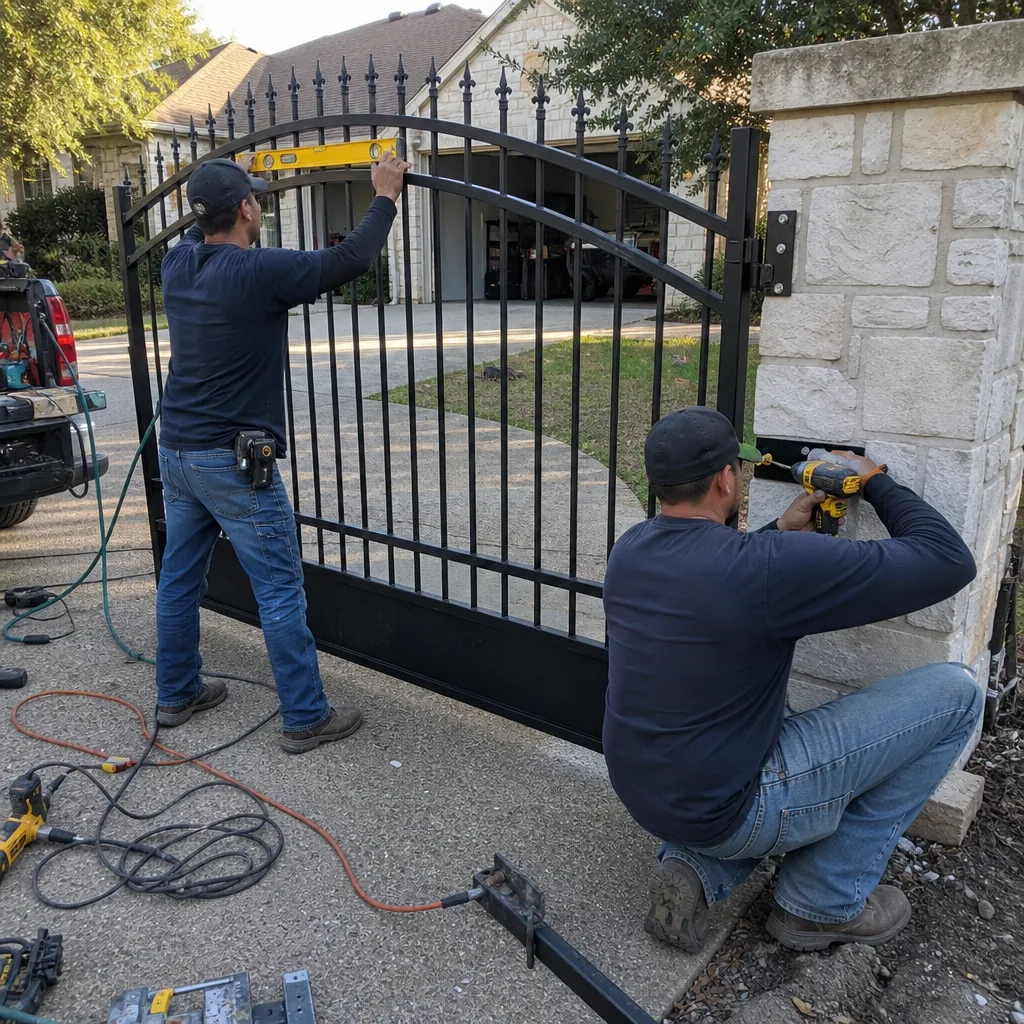
- Ignoring hesitation because the gate “still works.” A gate that hesitates is a gate that is wearing out its own control board. The repair gets more expensive the longer you wait, and the failure never happens at a convenient time.
- Lubricating a grinding gate instead of finding the cause. Spraying lubricant into a grinding operator housing or onto a scraping wheel temporarily quiets the sound without fixing the wear. The grinding comes back, and now the worn component has had more time to degrade.
- Fixing the symptom, not the root cause. If the gate is scraping because the post has settled, adjusting the operator to compensate for the drag is a temporary patch. The post keeps moving, and the misalignment comes back harder.
- Forgetting to check the photo-eye when the gate acts up. A huge share of “my gate stopped working” calls are a misaligned photo-eye that takes five minutes to fix. Checking the LED on the receiver before you call saves everyone time.
- Waiting until the gate stops working entirely before calling anyone. The difference between a $200 hinge repair and a $900 operator replacement is frequently a homeowner who called at the first sign of change versus one who called at the first sign of catastrophe.
- Assuming the gate is fine because it’s quiet. A gate problem can be silent: a post shifting, a limit switch drifting, a safety edge going dead. Quiet doesn’t mean healthy. Watch the movement, not just the sound.
When to Call a Professional
Some gate repairs are simple enough for a patient homeowner. Realigning a photo-eye housing, clearing a plant from the beam path, tightening a loose bracket: these are reasonable DIY tasks for someone who’s comfortable with basic tools. But a gate that is grinding, sagging, hesitating, or stopping intermittently is usually pointing at a problem that requires either a specialized part or a diagnosis that comes from seeing hundreds of similar failures. And any issue involving the gate operator itself, the control board, or the high-tension spring on a slide gate should go to a trained technician. Those springs store enough energy to do serious harm if released incorrectly, and the control board is not a component you want to troubleshoot by guesswork.
Vance Gate Repair Murphy offers free estimates in Murphy, and the quote is written before any work begins. Call (469) 613-2832 if you have a gate that’s talking to you and you’re not sure what it’s saying.
Frequently Asked Questions
Most gate repairs in Murphy run between $150 and $900 depending on the component. A hinge bushing or wheel replacement is typically $100 to $250. A capacitor or limit switch replacement runs $150 to $350. A control board replacement is $400 to $800 depending on the operator brand. A post reset with re-squaring of the gate runs $350 to $900 depending on whether welding is required. Every Vance Gate Repair Murphy job carries a written price before work starts, so the number you’re quoted is the number you pay. Call (469) 613-2832 for an exact quote on your specific gate.
If your gate has stopped working entirely or is stuck in a position that leaves your property unsecured, call (469) 613-2832 and a live person will answer. Emergency repair availability depends on the day’s schedule, but we do not route callers through a voicemail loop, we tell you directly whether today or tomorrow is realistic and what the visit will cost before we dispatch.
The photo-eye is the infrared safety beam that stops or reverses the gate if a person, pet, or object crosses the path while the gate is moving. If your gate reverses with nothing in the way, or refuses to close at all, look at the small LED on the receiver side. A changed or blinking pattern from what you remember is a strong indication the beam is misaligned or blocked. Sunlight, wind, and landscape growth in Murphy are the three most common causes.
Hesitation means the operator is drawing extra current to overcome mechanical resistance, usually from a binding hinge, a dragging wheel, or a gate leaf that’s no longer square. The delay is the moment the control board is working hardest, and every cycle of that extra current shortens the board’s life. It’s the warning sign most worth catching early.
We service nine major gate-automation brands including Ghost Controls, DoorKing, Elite, and Mighty Mule, along with several others. The approach is to repair the operator already on the property when repair makes sense, not to push a replacement unless the existing unit is genuinely beyond economic repair.
In Murphy, expansive clay soil moves under the driveway and gate posts with seasonal moisture changes. A post that has settled or leaned by half an inch is enough to drop the gate leaf into contact with the concrete. The drag mark you see is the gate telling you the post needs attention before the hardware starts taking fatigue damage from the misalignment.
The Bottom Line
Your gate is not a quiet machine. It tells you what’s wrong through hesitation, grinding, scraping, slowed speed, intermittent stopping, and visible misalignment. The skill isn’t hearing the warning sign, it’s reading what the warning sign is pointing to, and the map above should make that easier. Most of these symptoms are repairable in one visit if you catch them early. All of them get more expensive if you wait. Document the symptom, decide whether it’s a scheduled repair or a same-week issue, and call someone who will give you a written price before touching the gate. Browse our more guides & resources for additional help.
At Vance Gate Repair Murphy, every visit starts with the same thing: we listen to what the gate is doing, we watch it run, and we write down what we find. Then we write down the price, and then we do the work, and then we leave you with photos of everything that was changed. It’s the only way we’ve worked since 2014, and it’s the standard every gate in Murphy deserves.
Call (469) 613-2832 for a free estimate. A live person answers, any hour.
Written by Adrian Vance, Owner at Vance Gate Repair Murphy, serving Murphy since 2014.