
Free on-site gate assessment - hinges, posts, and your LiftMaster or Nice gate operator checked before anything is quoted
The assessment is free and the quote is the invoice.
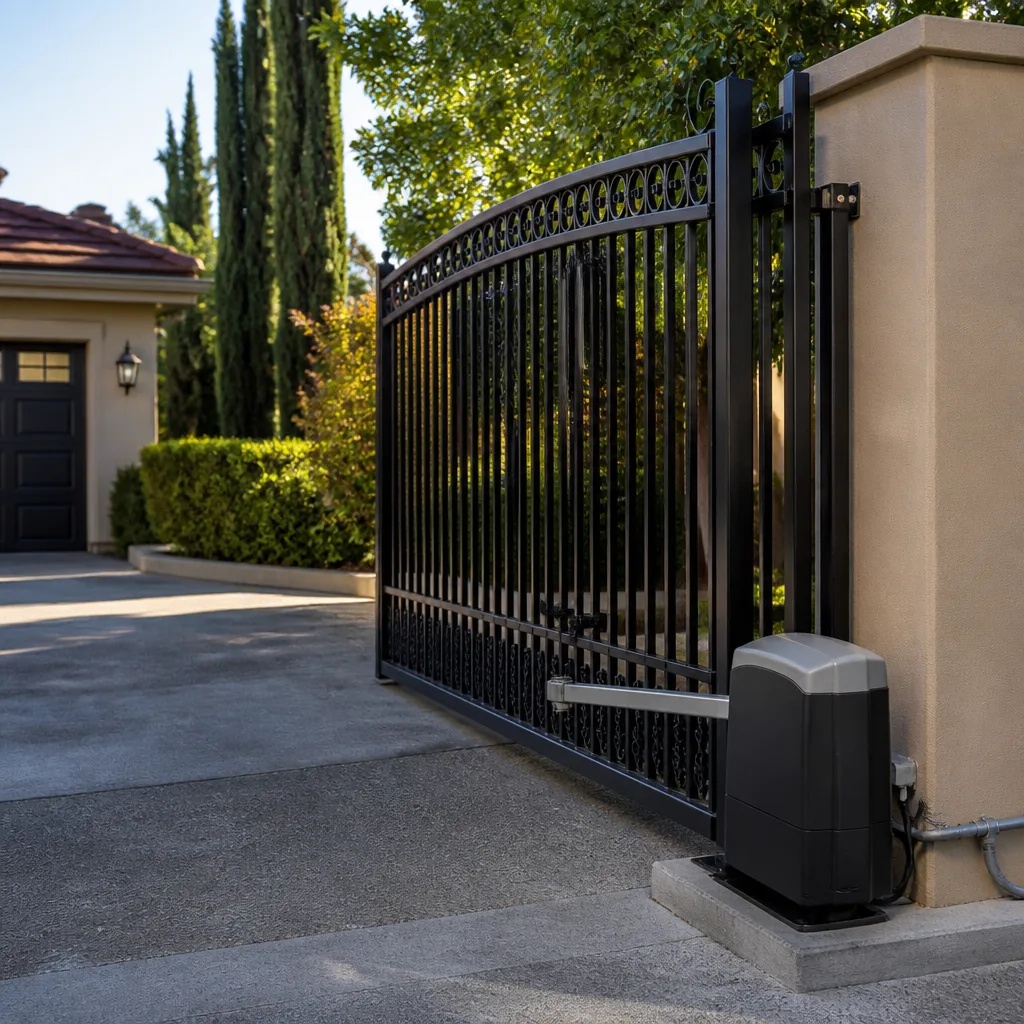
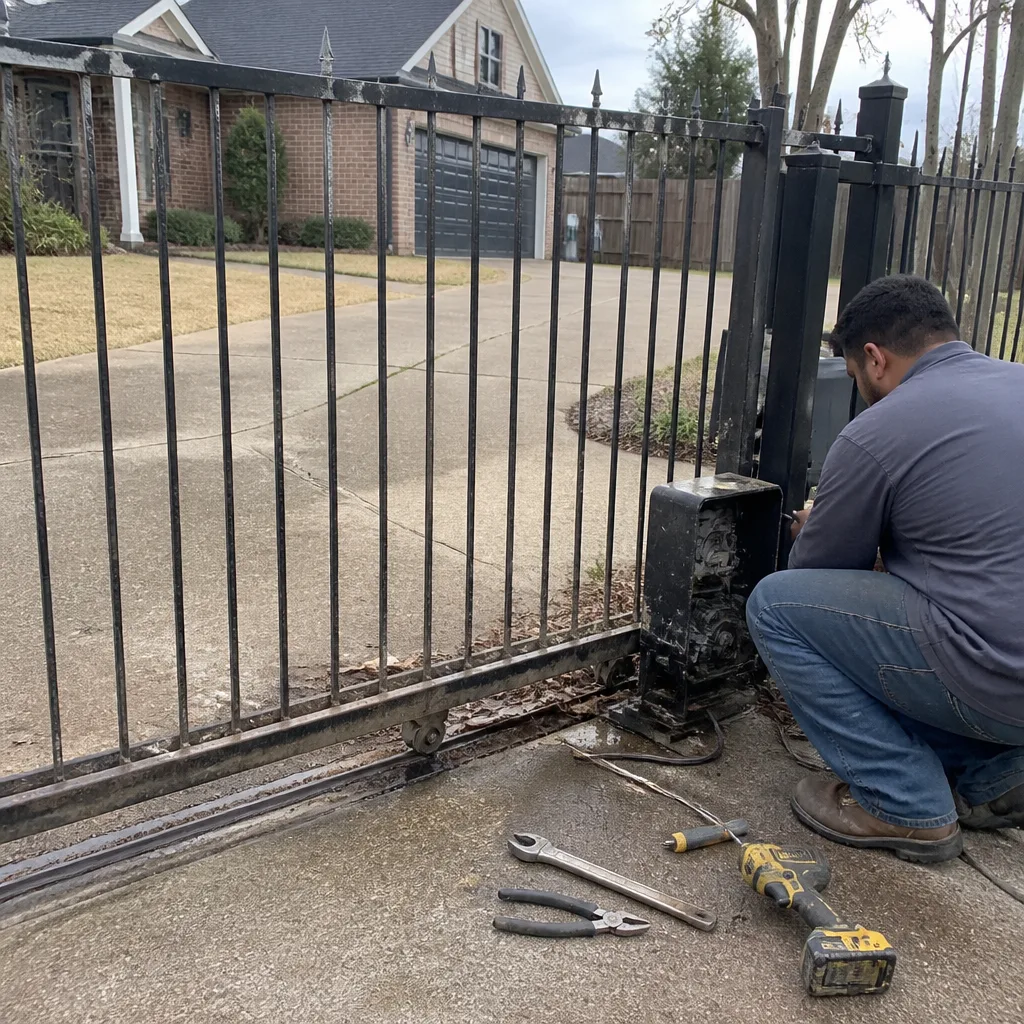 Before
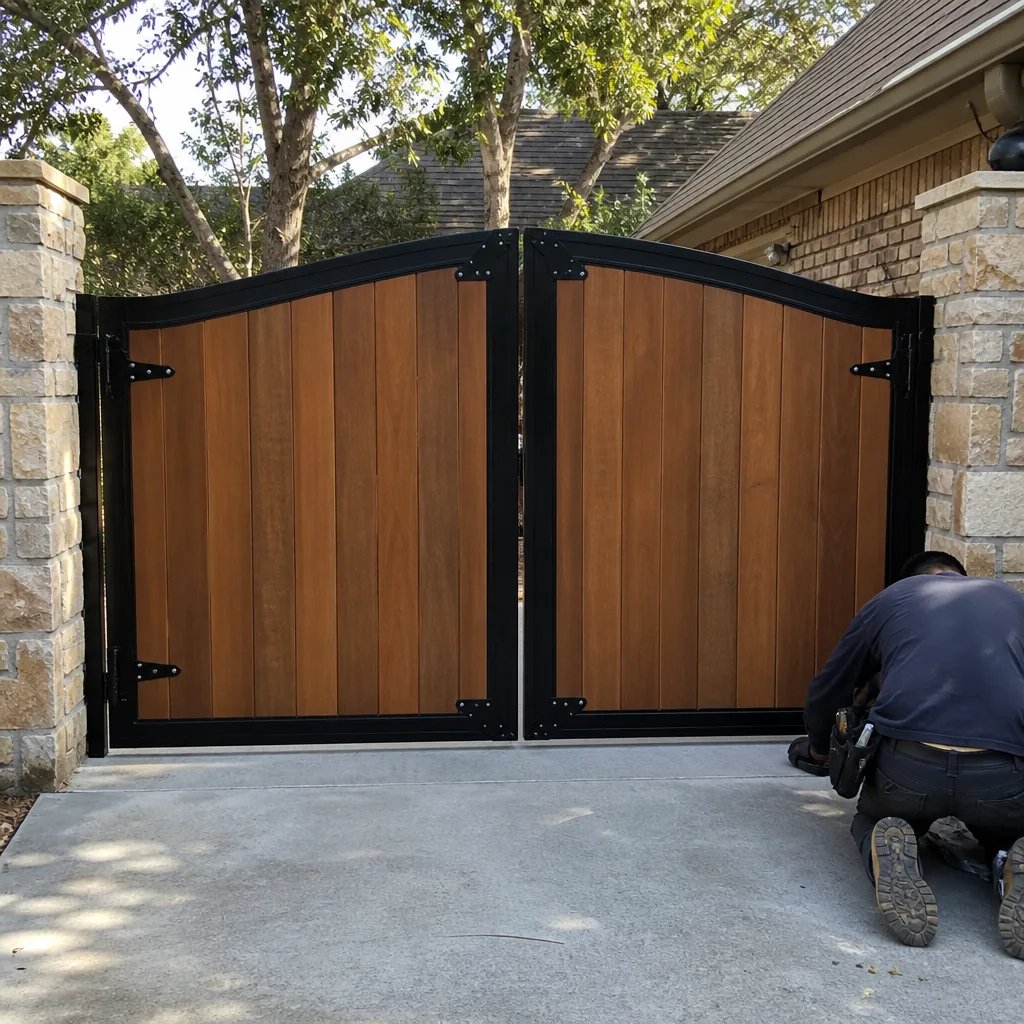 After
After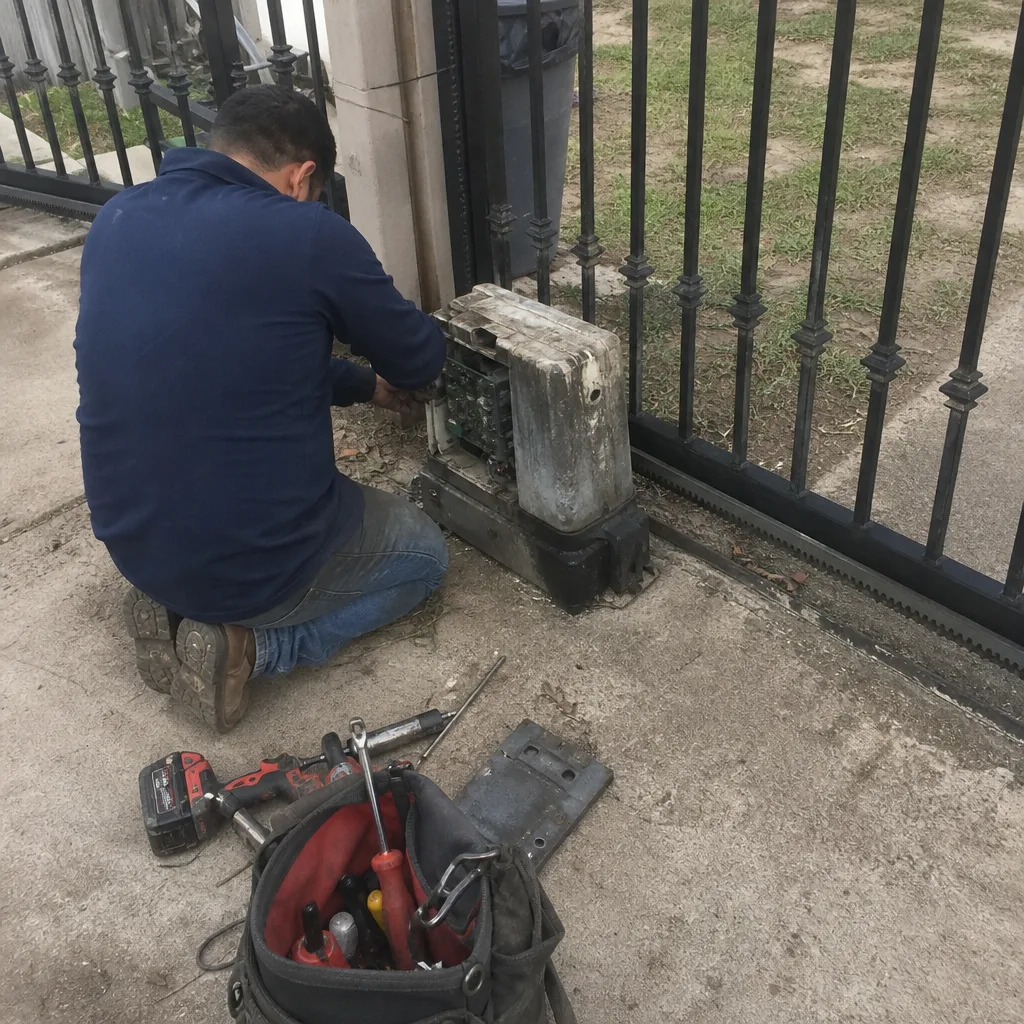 Before
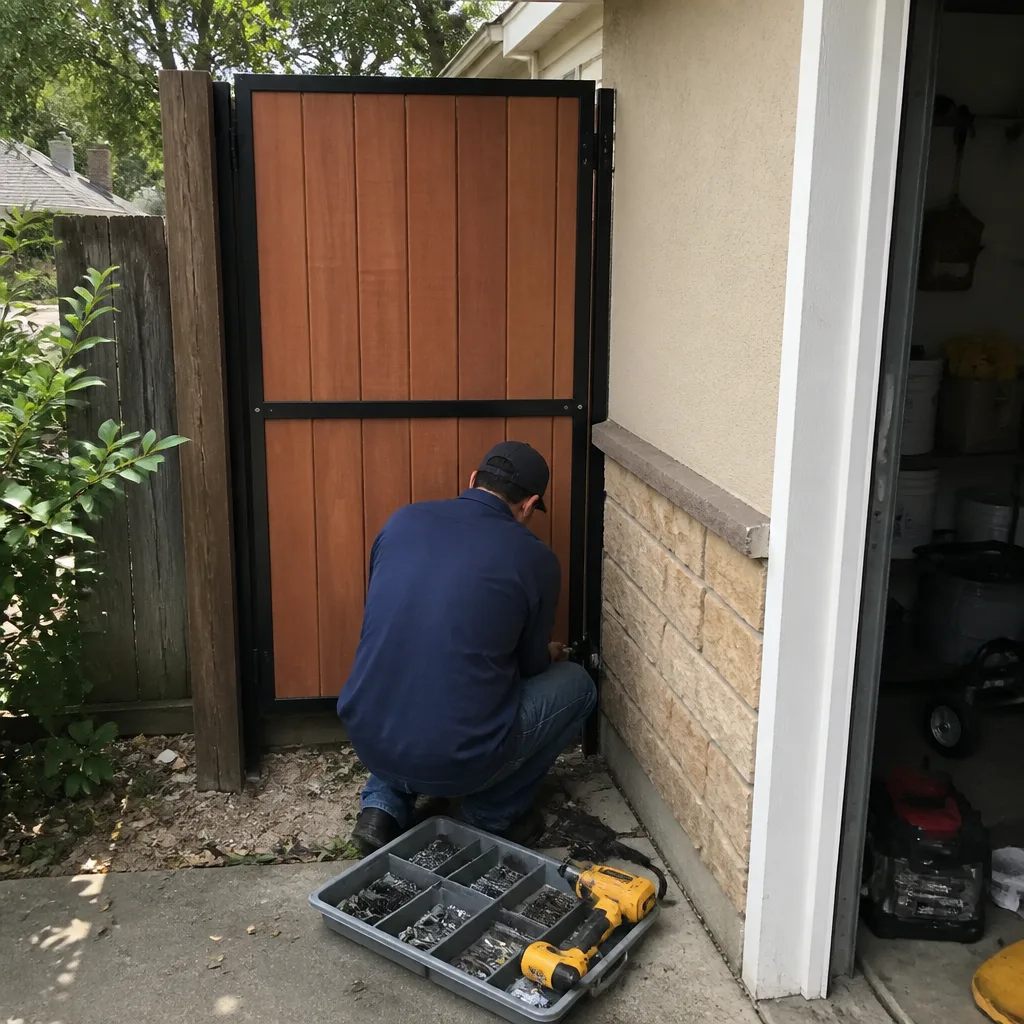 After
After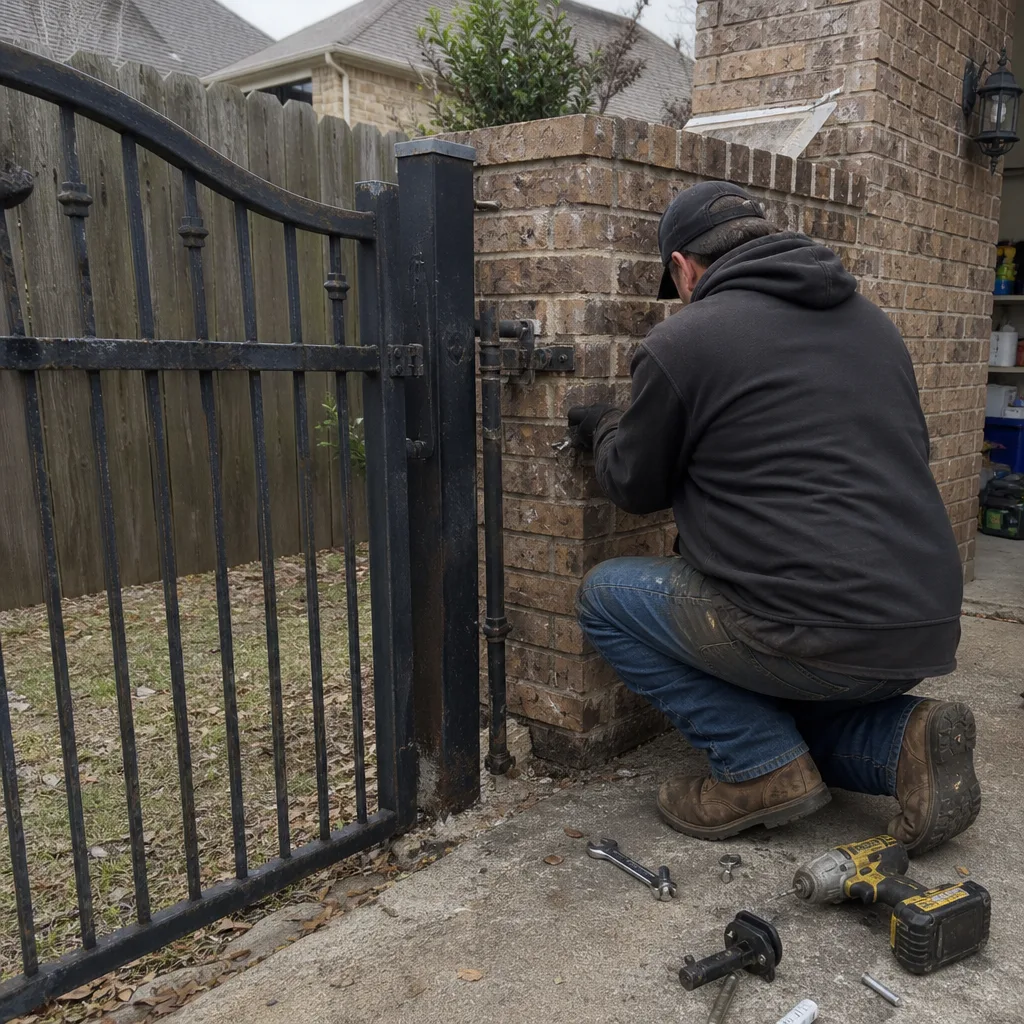 Before
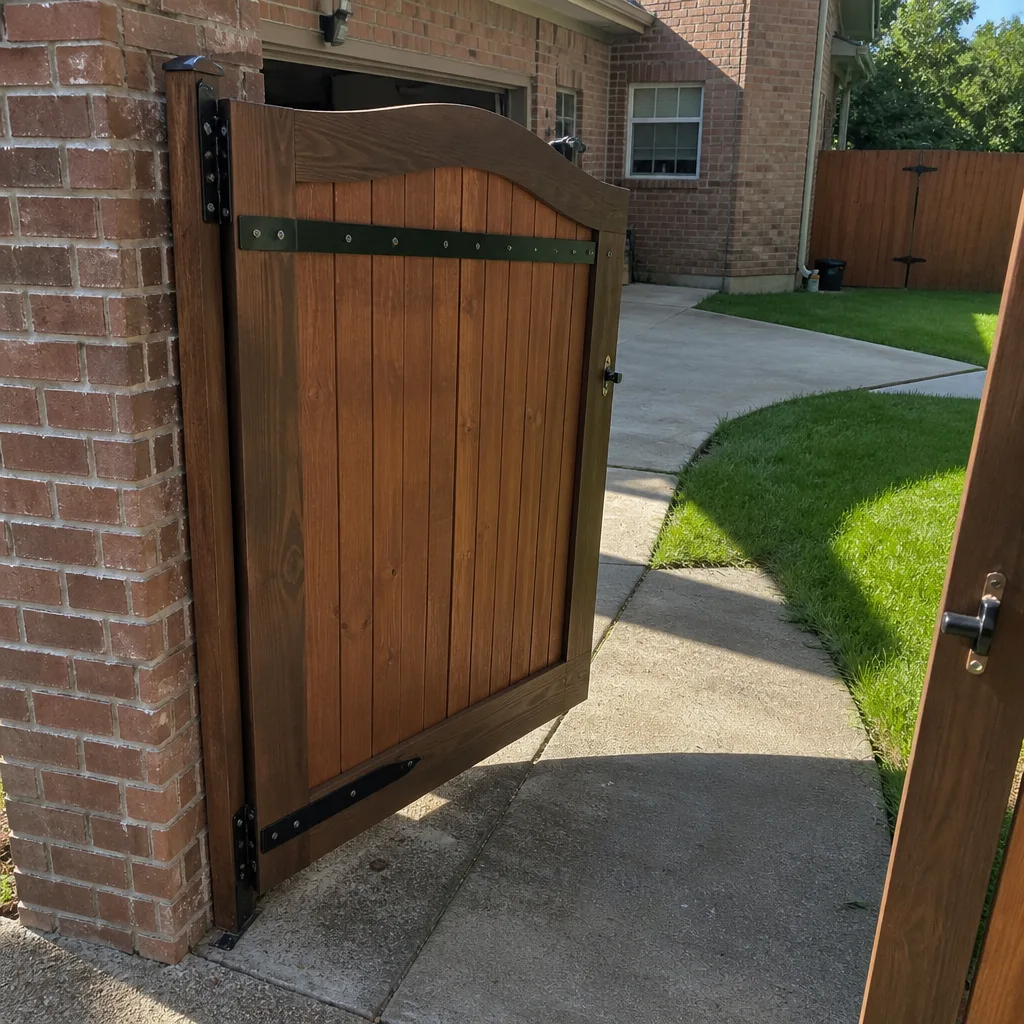 After
AfterGhost Controls Hinge & Roller Replacement: The Murphy Owner’s Guide
Ghost Controls hinge and roller replacement in Murphy typically runs between $180 and $340 installed for a single hinge or roller, and we stock the common Ghost Controls-compatible sizes on our trucks so most jobs are done same-day. The part most owners don’t realize is failing until the gate starts dragging or binding usually isn’t the motor at all, it’s a roller with a flattened bearing or a hinge pin that’s been working loose for six months. We’re an independent service provider, not affiliated with Ghost Controls, which means we repair and replace these parts on the equipment you already have rather than pushing you toward a new opener.
Here’s how most Murphy homeowners discover the problem: the gate still opens, but it sounds like it’s working harder. A low groan from the gearbox, a visible sag at the latch end, or a wheel that leaves a flat spot in the gravel. By the time you hear it, the hinge or roller has usually been failing for weeks. Adrian Vance has pulled Ghost Controls hinges out of driveways in Cobblestone Farms and along Murphy Road where the bearing had disintegrated completely, leaving the gate riding on the steel pin itself. That’s the point where the motor starts pulling double duty, and that’s what shortens a Ghost Controls operator’s life.
Which Ghost Controls Models This Applies To
Ghost Controls runs its hinge and roller components across a family of single and dual swing gate opener kits, most commonly the AXDP, AXD, and TSS1 series you’ll find on residential gates in Murphy. The hinge barrels on these systems are sized for gates weighing up to roughly 850 pounds per leaf and up to about 20 feet in width, though we see most Murphy installs in the 12 to 16 foot range. What matters for a correct replacement isn’t the opener model alone, it’s the gate leaf weight, hinge barrel diameter, and the roller wheel diameter on the support wheel at the far end of the gate.
Here’s the compatibility gotcha we run into constantly: a worn Ghost Controls gate often has a roller wheel that’s 2-5/8 inches in diameter, but the replacement wheels sold generically are sometimes 2-1/4 or 3 inches. The smaller wheel changes the gate geometry and loads the hinge differently. The larger one lifts the gate enough to bind the opener arm. We match the wheel to the existing gate height and weight before ordering, and we verify against the Ghost Controls install manual where the model number is still legible on the opener arm label. For OEM versus aftermarket, Ghost Controls parts are generally well made for the price, but for hinge pins and roller wheels specifically, we’ve had good results with quality aftermarket equivalents matched to the original dimensions, and we’ll tell you which one we’re installing and why before we start.
Signs Your Ghost Controls Hinge & Roller Replacement Is Failing
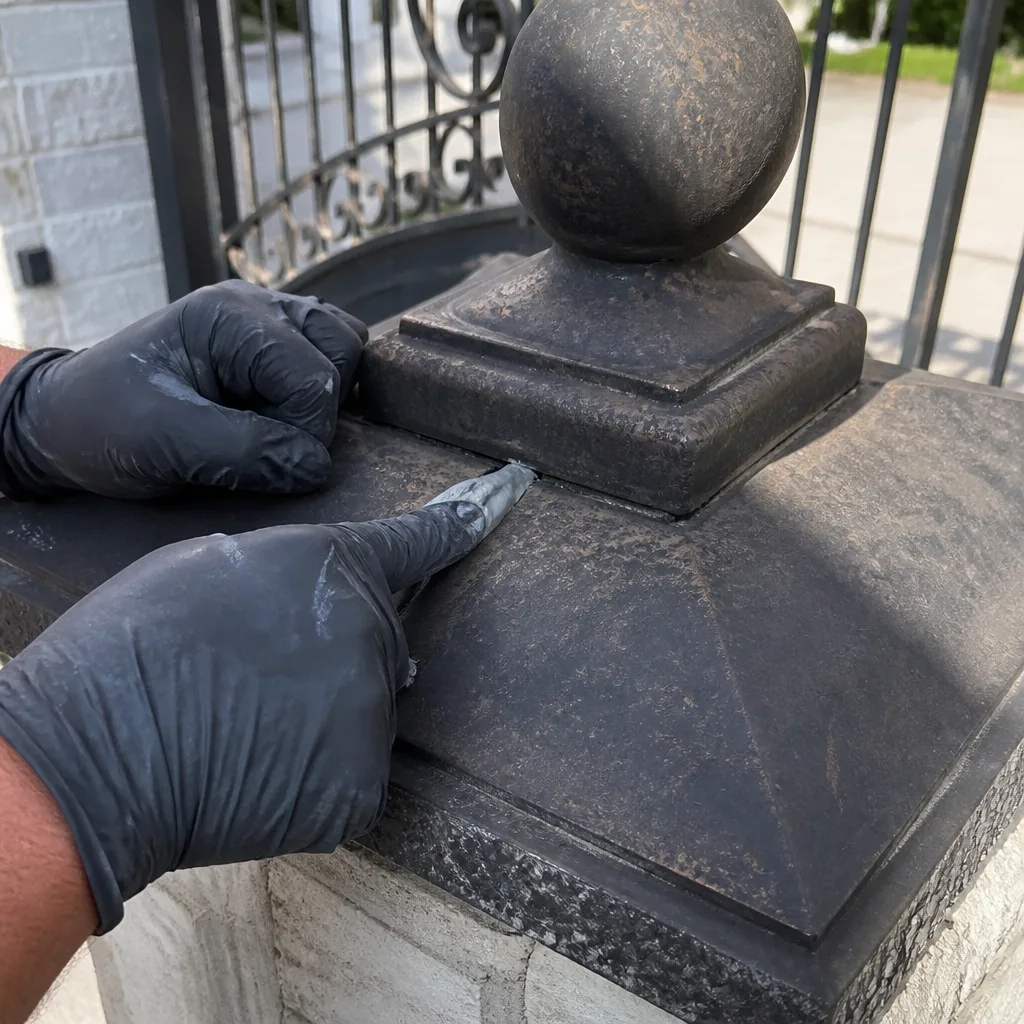
- The gate sags visibly at the latch end. This means the hinge pin or the hinge barrel itself has worn enough that the gate leaf is no longer sitting level. The opener is now fighting gravity on every cycle.
- The gate shudders or binds at one specific point in its travel. A flat-spotted roller wheel will hit the same spot every time, and the motor draws more current to push through it.
- You hear a metallic scrape or click from the hinge area. The pin is moving in an enlarged hole, or the roller bracket has come loose from the gate frame. Both only get worse.
- The gate is harder to push manually in one direction. With the opener disengaged, a healthy gate should swing freely. Drag means something in the hinge line or roller path has failed.
- The Ghost Controls opener beeps a force obstruction code repeatedly. The control board reads the increased resistance and assumes something is in the way. The real obstruction is a failed roller or hinge, not debris.
One specific failure we see in Texas more than anywhere else: hinge pins that corrode inside the barrel due to the freeze-thaw cycle we get in Collin County winters, then seize, then snap the hinge ears off the gate frame. It’s a cheap part that turns into a fabricated bracket and a much bigger invoice when it’s ignored.
BeforeAfterReplacement Cost & What’s Included
In Murphy, a Ghost Controls hinge replacement typically lands between $180 and $280 installed, and a roller wheel replacement runs $120 to $220. If both the hinge and roller on the same gate leaf need replacing, expect $300 to $340 for the pair. The spread comes down to three things: whether we’re replacing one hinge or both hinges on a leaf, whether the roller bracket is reusable or needs to be welded back to the gate frame, and whether the gate is single or dual leaf.
Every quote is written and handed to you before we touch a tool. That’s Haven Standard Clause 1. The price includes the hinge or roller part, the labor to remove and install it, realignment of the gate so the Ghost Controls opener isn’t fighting the geometry, and a photographed record of what was found, what was replaced, and the new part number installed. No surprise invoice. No ‘the bracket was worse than we thought’ phone call. The 365-Day Done Right Promise covers the work: if it’s not right, we make it right, no fee, no argument, for a full year.
DIY or Call Us?
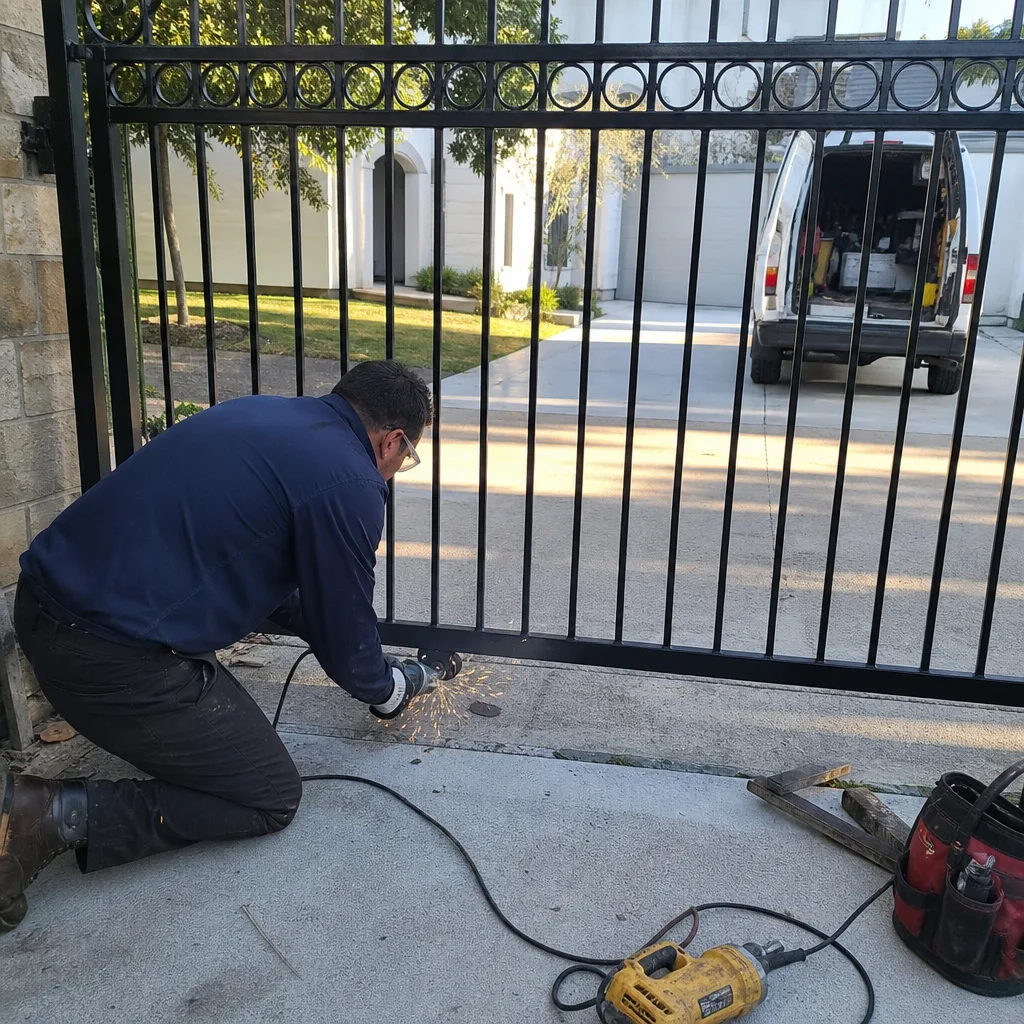
What you can safely do yourself: disengage the Ghost Controls opener and push the gate manually to feel where it’s binding. You can look at the roller wheel and see if it’s flat-spotted or if the bracket is loose. You can photograph the hinge pin and the opener arm label so you know what you’re working with. That’s useful diagnostic work, and it costs nothing.
Here’s where DIY goes wrong on this specific part: a gate leaf that weighs 400 to 800 pounds stores a lot of energy when it sags, and the hinge pins are under constant shear load. If you pull a pin without properly supporting the gate, the leaf can drop and take the opener arm, the post, or a hand with it. We’ve also seen homeowners replace a roller wheel with the wrong diameter and then chase phantom Ghost Controls obstruction codes for weeks. The swap itself is usually quick when it’s done with the gate properly supported and the geometry checked afterward. If you’re not set up for that, call us at (469) 613-2832 and we’ll have a technician out with the right parts on the truck.
FAQs
In North Texas weather, expect 6 to 10 years from the original hinges and 4 to 7 years from the roller wheels, with the shorter end being normal for gates over 14 feet or gates that get daily cycle counts above 20. Heat and the occasional freeze-thaw cycle break down the bearing grease and accelerate pin wear. If your gate has a wind screen or you’re on the open side of Murphy with no windbreak, plan for the shorter end of that range. Call (469) 613-2832 and we’ll inspect and quote it in writing.
Generally no. Once the pin and barrel are worn enough to sag the gate, the metal has moved and machining solutions cost more than a replacement. The exception is a hinge bracket that has come loose from the post, which can sometimes be re-welded and re-drilled. We’ll tell you which situation you have after one look. Estimates are free.
Most single-gate hinge and roller jobs are done in 60 to 90 minutes. A dual-leaf gate with both hinges and both rollers is typically 2 to 3 hours. We quote the price before we start and hand you the written record when we leave.
Yes. Our trucks carry the common Ghost Controls-compatible hinge pins, barrels, and 2-5/8 inch roller wheels for the AXDP and TSS1 series we see most in Murphy. For unusual sizes we can usually have the part in hand within one business day. We also stock parts for LiftMaster, Mighty Mule, and DoorKing, which matters when a gate has been pieced together with mixed hardware over the years. Call (469) 613-2832 and we’ll confirm what’s on the truck before we dispatch.
Written by Adrian Vance, Owner, Vance Gate Repair Murphy at Vance Gate Repair Murphy, serving Murphy and nearby areas.