
Last updated September 20, 2026
Free on-site gate assessment - hinges, posts, and your LiftMaster or Nice gate operator checked before anything is quoted
The assessment is free and the quote is the invoice.


 Before
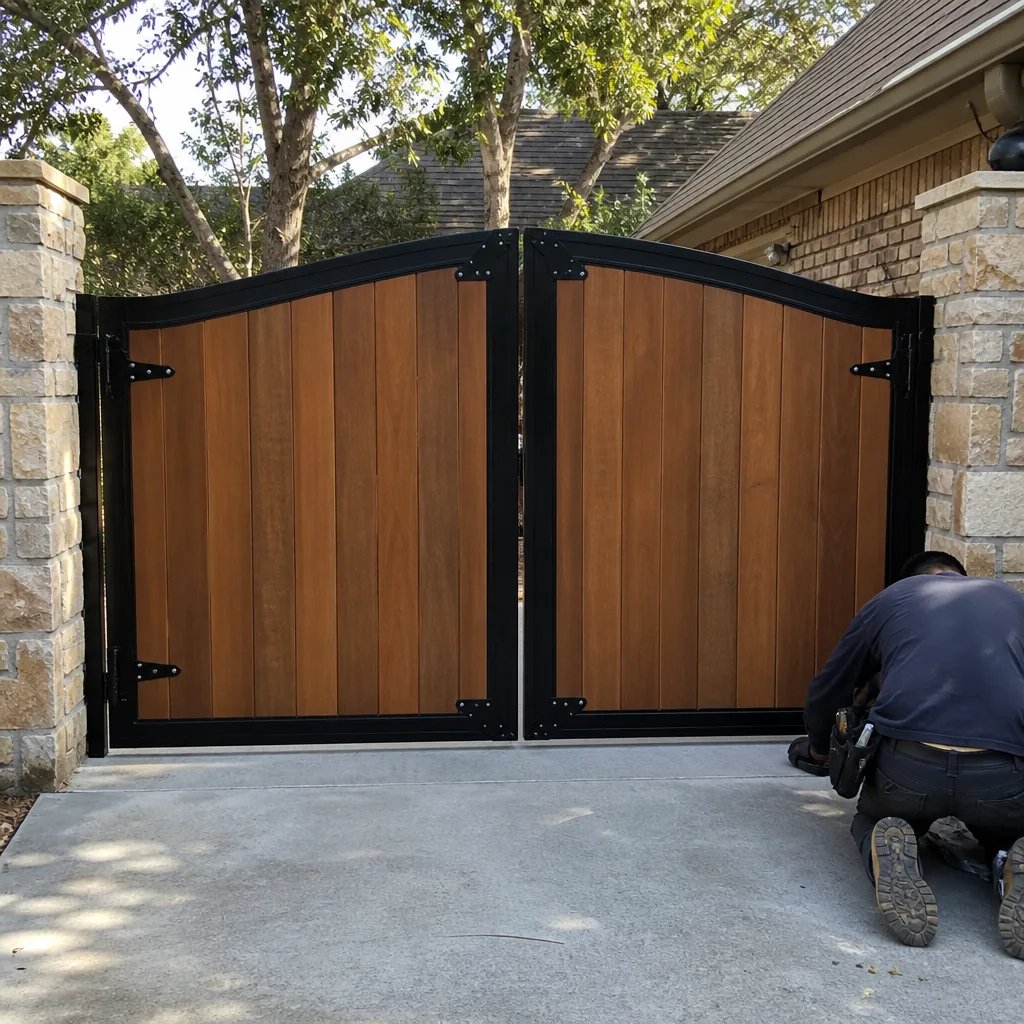 After
After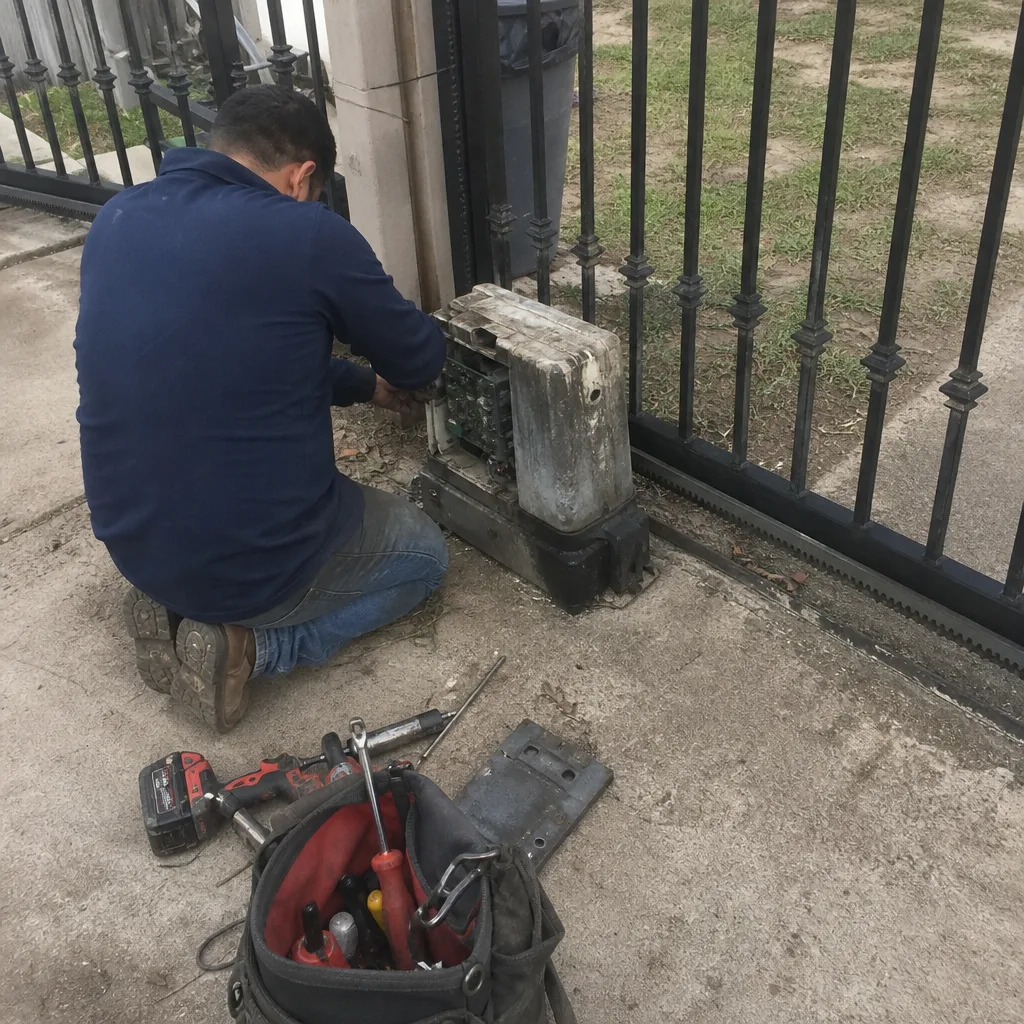 Before
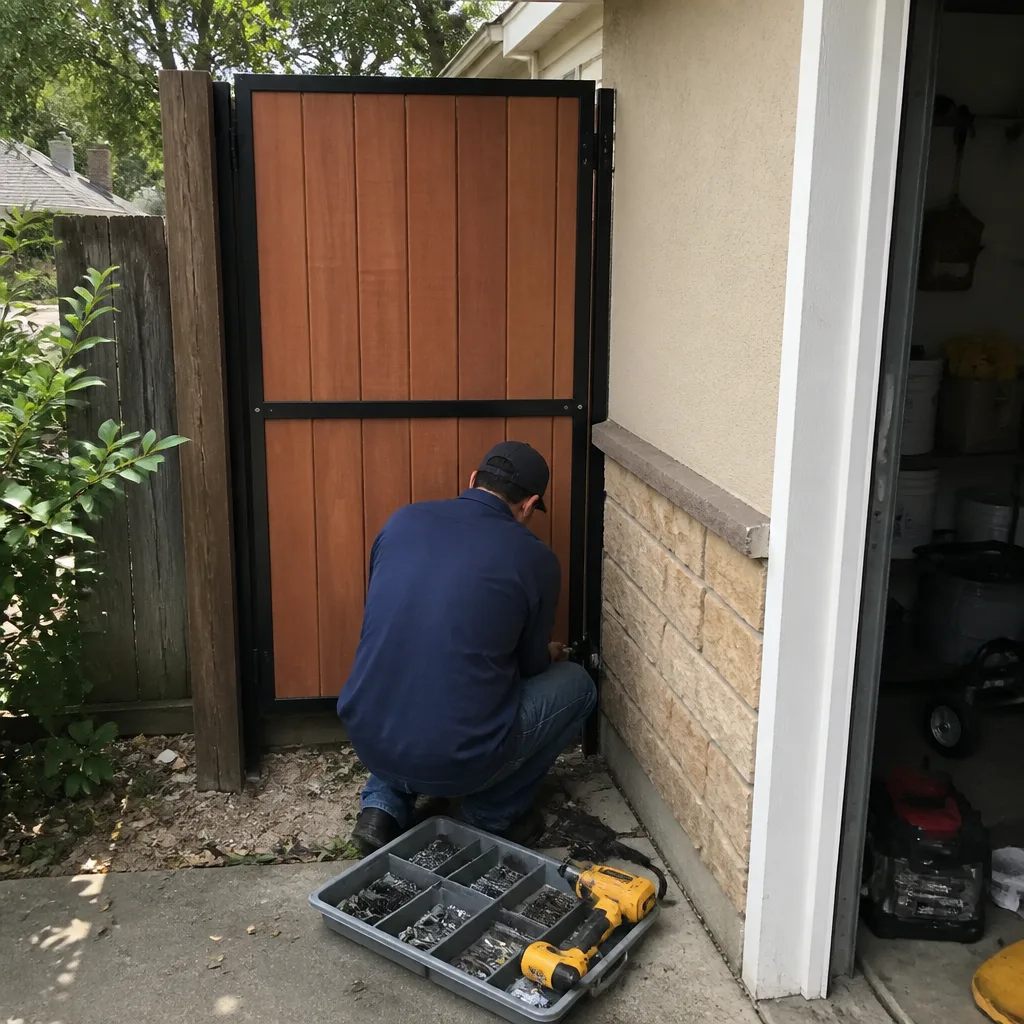 After
After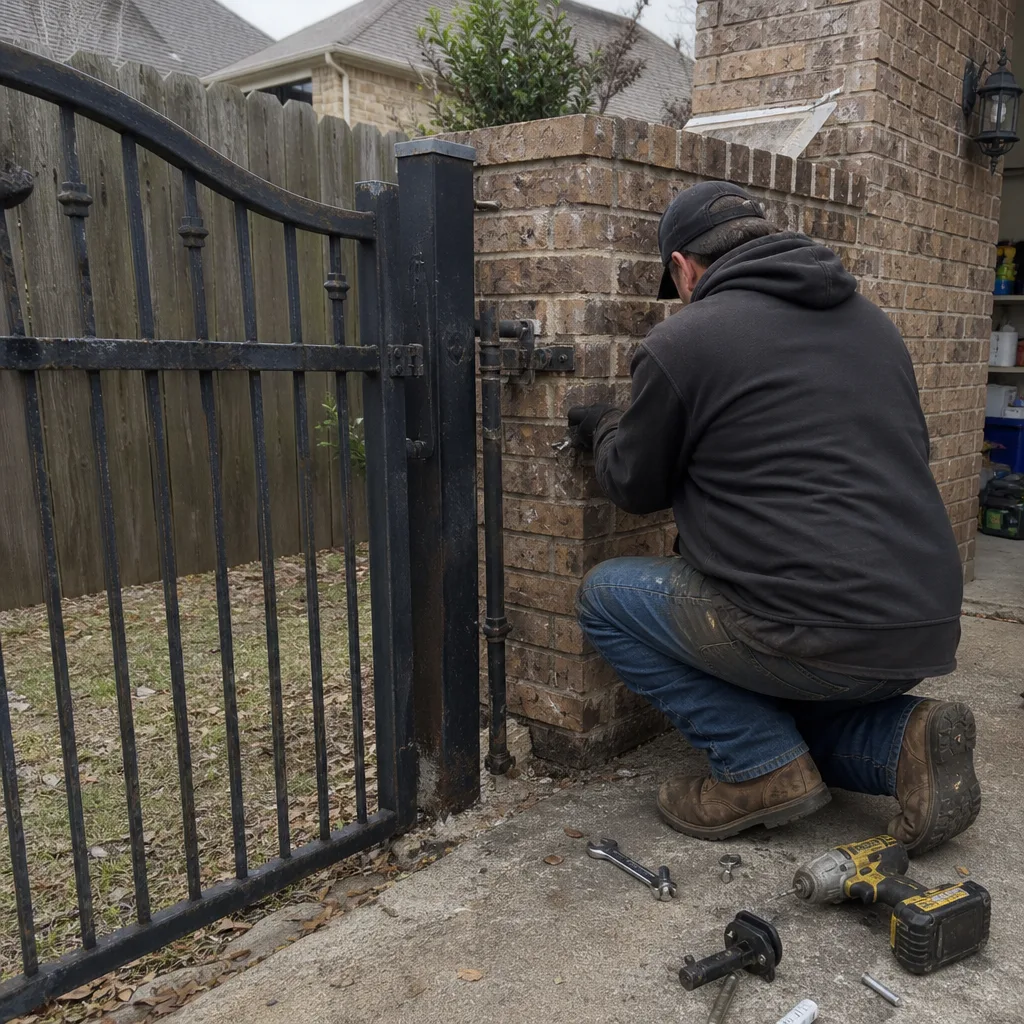 Before
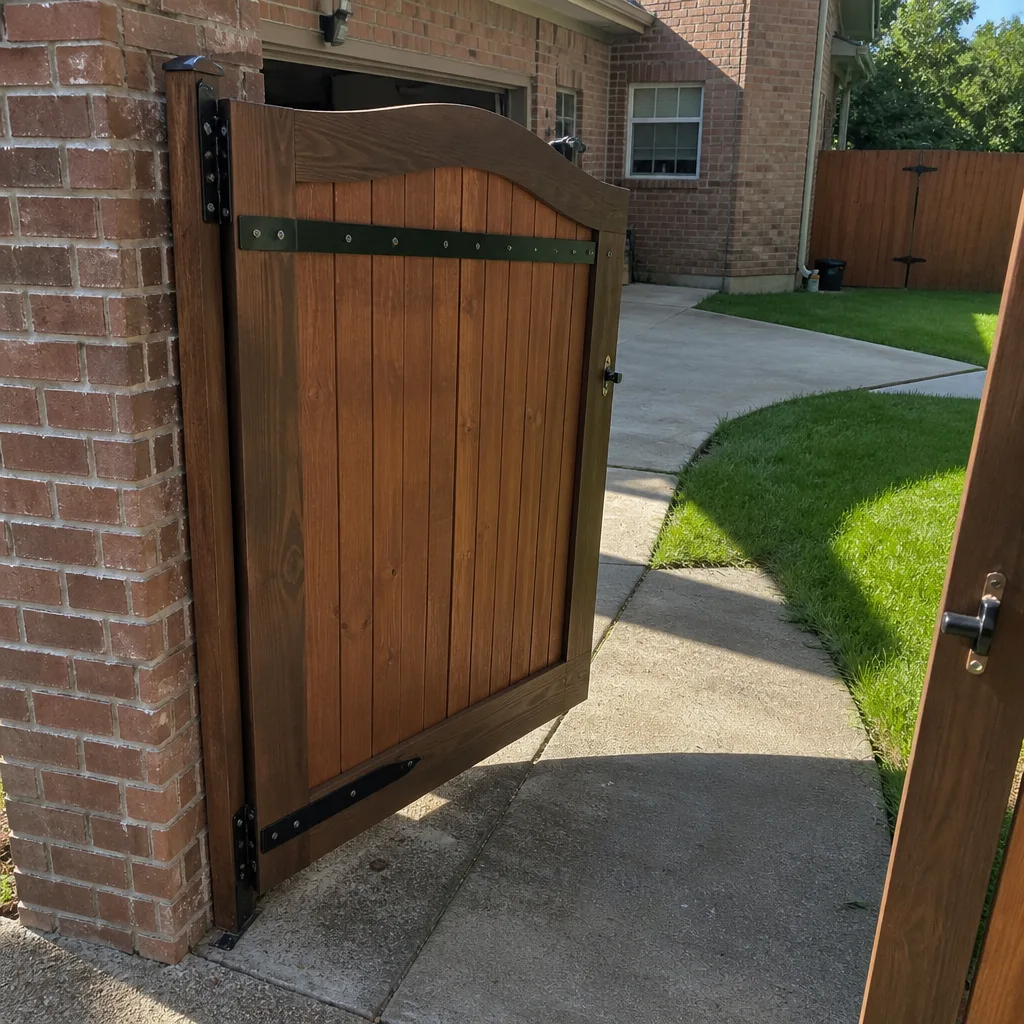 After
AfterSeasonal Gate Repair Care for Murphy: Year-Round Homeowner’s Guide
Murphy sits on some of the most reactive clay soil in Collin County. That soil can move a gate post measurably between January and March without a single freeze-thaw event, just from moisture absorption alone. The post shifts, the hinges bind, the motor strains against a load it was never designed to carry, and a gate that worked fine in October fails in February. This guide maps Murphy’s actual weather pattern to the specific gate components it degrades, season by season, so you know what to check, what to record, and when to schedule our Gate Repair services before it becomes a $1,400 motor replacement instead of a $95 limit-switch adjustment.
Quick Answer
Seasonal gate care in Murphy means four short inspections timed to the weather, not the calendar. In winter, check post plumb and hinge gap after rain events. In spring, clear storm debris from the track and photo-eye path, then test the safety loops. In summer, look for cracked insulation on control board wiring and listen for a motor that labors in afternoon heat. In fall, test the battery backup, torque the hinge bolts, and survey the ground for moisture pooling at the post base. Most fixes are under $150 if caught early; most full motor replacements run $850 to $1,400 and start as a small seasonal issue that went unwatched.
Table of Contents

- Winter in Murphy: Clay Expansion and the Post That Moves
- Spring Storm Season: Debris, Limit Switches, and Safety Edges
- Summer Heat: Operator Components That Fail First
- Fall Pre-Winter Checklist: Battery, Hinges, and Ground Moisture
- How to Keep a Seasonal Gate Log
- Understanding Your Gate Operator: The Components That Wear
- Murphy Gate Motors: What We See on FAAC, BFT, Linear, and Viking Units
- Common Mistakes to Avoid
- When to Call a Professional
- Frequently Asked Questions
BeforeAfterWinter in Murphy: Clay Expansion and the Post That Moves
Murphy’s winter is not a freeze-thaw story the way it is in Oklahoma or Kansas. It is a moisture absorption story. The clay under Murphy expands when it takes on water, and it takes on water slowly, over weeks of rain and wet weather. A gate post set in that clay does not have to freeze to move. It just has to have wet soil pushing against it.
What we see in January and February, after the fall rains have saturated the ground, is a pattern: the gate post drifts out of plumb by a quarter-inch to a half-inch. A quarter-inch of drift at the post translates to a much larger misalignment at the latch or the motor arm, because the gate is a lever. The longer the gate leaf, the more the far end moves for every fraction of an inch at the post.
Here is how to measure it without special tools:
- Hold a 4-foot level vertically against the gate post, on the side facing the gate leaf. Check two faces: the one parallel to the fence line and the one perpendicular to it.
- Mark the bubble position with a pencil. Take a photo with your phone. Date it.
- Repeat the same measurement after two consecutive days of heavy rain, then again two weeks later. Compare the photos.
- If the bubble has moved more than one full bubble-width off center on either face, that is immediate attention territory. The post is moving under load and the operator is compensating for it every cycle.
- If the bubble has moved less than that, record it and check again next month. That is a watch-and-record posture, not a panic.
One specific pattern we have documented in Murphy repeatedly, as detailed in The Complete Guide to Gate Repair in Murphy: a swing gate with a FAAC or BFT operator will develop a labored open cycle in winter even when the motor tests fine on a bench. The cause is almost always post drift binding the hinge side, not the motor itself. The motor works harder, draws more current, and trips its thermal overload sooner. A homeowner who replaces the motor without checking the post spends $1,100 and fixes nothing.
If you do not own a 4-foot level, any straight board and a phone level app works well enough for a seasonal trend record. The point is the record, not the tool precision. Two years of photos showing progressive drift tells a technician more than a single “gate is sticking” call. That is the kind of documentation we leave behind on every Gate Repair in Murphy job, and it is the same habit we recommend homeowners build on their own.
Spring Storm Season: Debris, Limit Switches, and Safety Edges
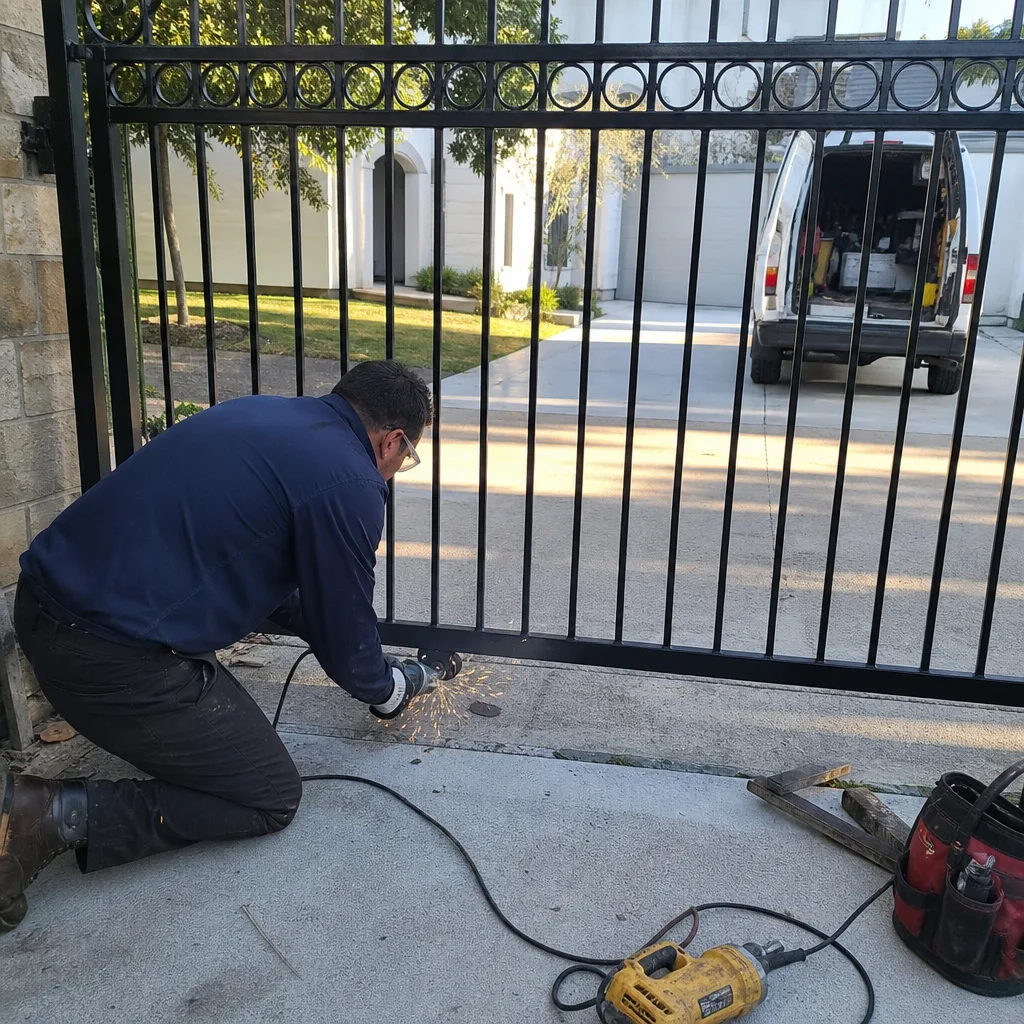
Murphy’s spring brings wind. Real wind. The kind that strips shingles and fills gate tracks with everything from leaf litter to roofing nails to pieces of neighbor’s fence. Most spring gate failures we see are not from the gate itself being damaged. They are from what the wind blew into the gate’s working parts.
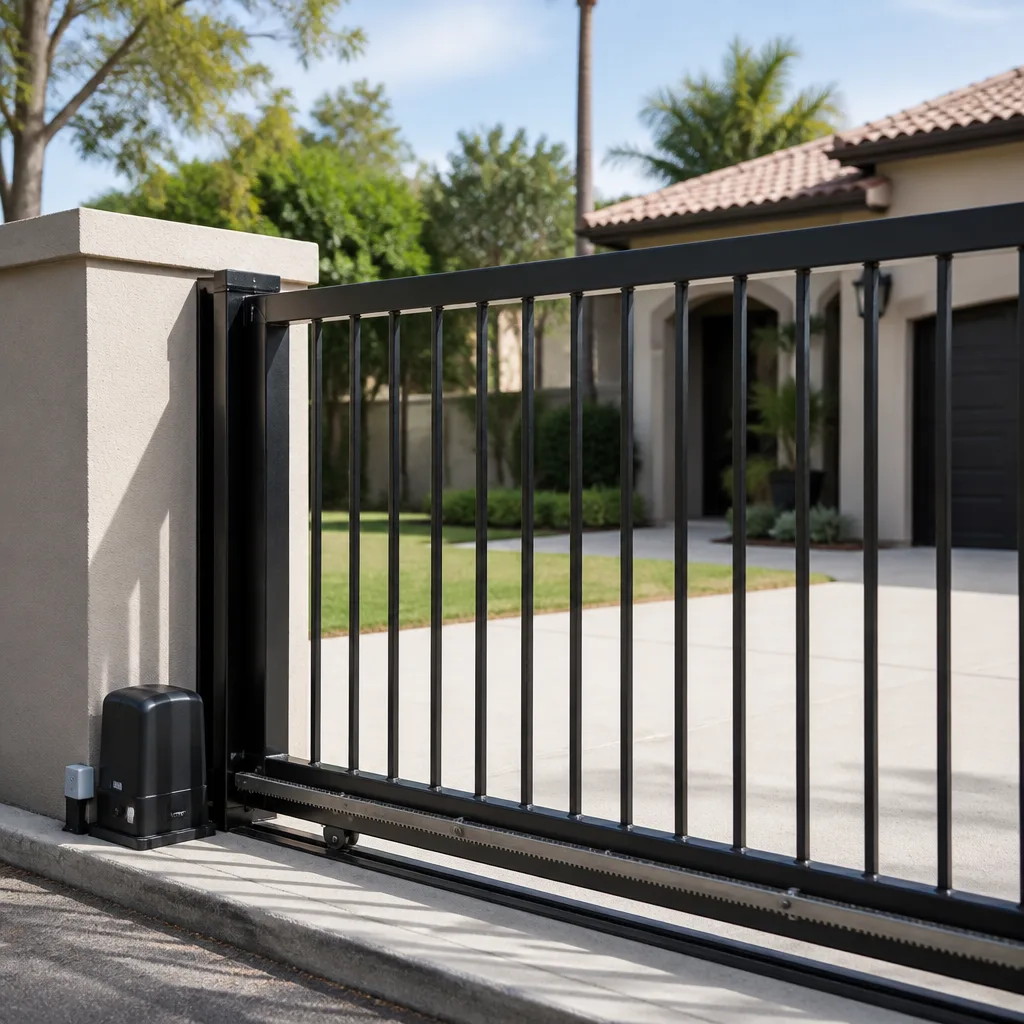
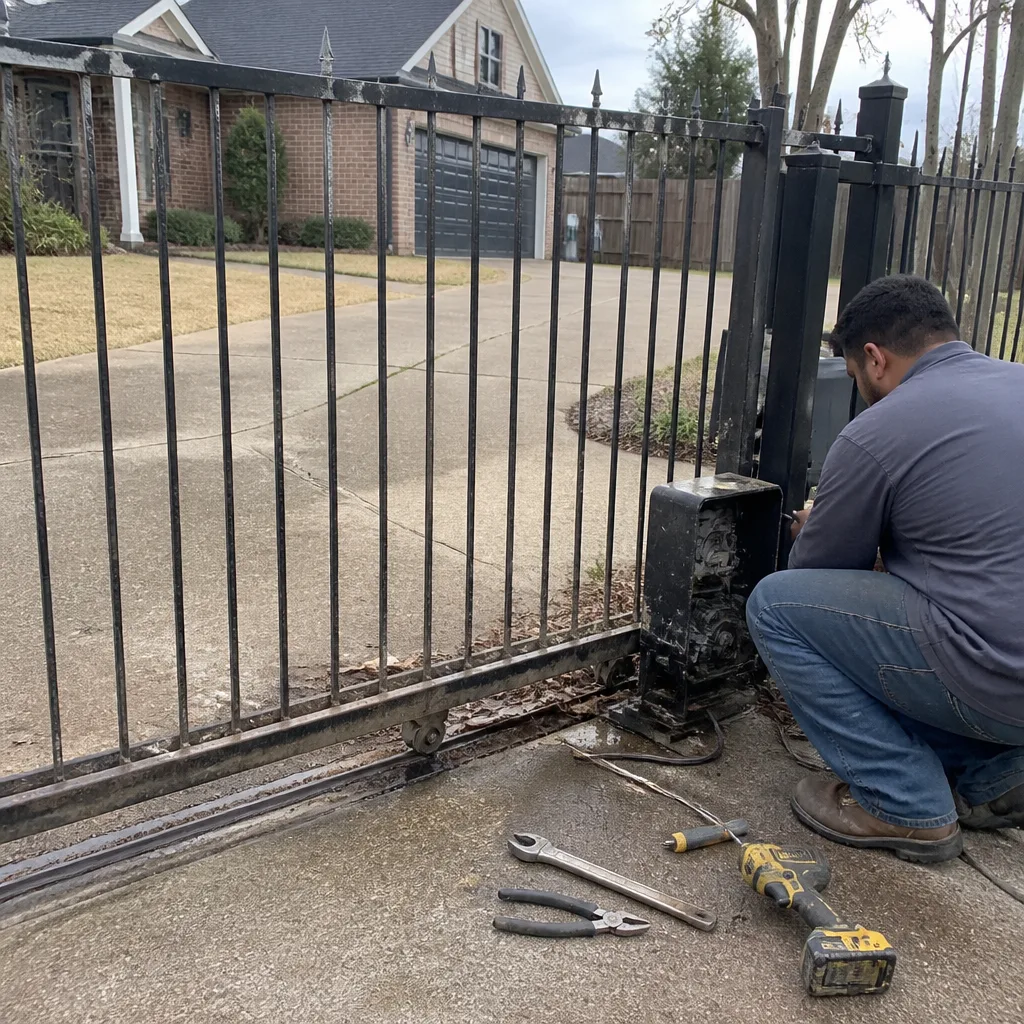
For sliding gates, the track is the first place to look after any storm with gusts over 40 mph. Debris in the track does not usually stop a gate immediately. It causes the gate to shudder slightly, then the wheels flatten a soft spot, then the gate drags, and the drag overloads the motor. The failure shows up as a tripped breaker or a gate that stops mid-travel and reverses. By then the wheel may have a flat spot that means replacement.
The specific operator components most vulnerable in high-wind events are threefold:
- Limit switches: On Linear and Viking operators especially, wind-driven gate movement can slam the gate against its mechanical stop hard enough to knock the limit switch out of adjustment. The symptom is a gate that stops two inches short of closed, or overtravels and bounces back.
- Safety loops: The underground wire loops that detect a vehicle sitting in the gate path are fragile at their exit points. Wind moves the gate and the concrete apron at different rates, and the wire insulation chafes. A loop that goes open-circuit means the gate will not hold open for a car, and on some control boards it means the gate will not auto-close.
- Antenna: The receiver antenna on many Murphy gates is a small wire or stub mounted on the operator housing. Wind does not break it directly, but wind-blown debris does. A 4-foot branch hitting an antenna at 35 mph snaps the connection. The remote still works, but only from 10 feet away instead of 60.
After a storm event, walk the gate through one full open and close cycle with your hand on the manual release, watching and listening. Watch for hesitation. Listen for grinding. Check the photo-eye path, the small infrared beam near ground level on each side of the gate opening. A misaligned photo-eye is the single most common spring repair call we get in Murphy: the gate starts to close, stops, reverses, and the homeowner assumes the motor is dying. Most of the time the photo-eye, that infrared beam that stops the gate if something crosses the path, was knocked off true by storm debris or wind. Realigning it takes minutes. Replacing the motor it was mistaken for takes hours and $900.
We log all of this in the written record we hand to every Murphy homeowner we serve. A proper Gate Installation in Murphy takes wind loading into account from the first day, but even the best installation needs a post-storm walk-through. It is the cheapest insurance you will ever do on a gate.
Summer Heat: Operator Components That Fail First
A Murphy summer means stretches of 100-plus degree days, and the gate operator sits in a metal housing that amplifies that heat by 20 or 30 degrees. The components that fail first are not the ones most homeowners expect.
The motor itself is rarely the first casualty. Motors are built for heat. The control board, the wiring, and the battery are the weak points. Here is the failure order we have documented over a decade of Murphy summers:
- Control board capacitors: The electrolytic capacitors on the control board are rated for a maximum temperature, usually 105°C. Inside a sealed operator housing on a 102°F Murphy day, ambient temperature in that box can reach 70°C before the motor even runs. Add the motor’s own heat during a cycle and the capacitors are operating at their limit. They swell, leak, or pop. The symptom is a gate that works intermittently, or works after a cool night but fails by 3 p.m.
- Wire insulation cracking: The low-voltage wiring inside the operator housing, particularly the harness connections to the limit switches and the photo-eye terminals, gets brittle under repeated heat cycling. Lift the housing cover on a 100°F day and run a finger along the wire bundle. If the insulation feels stiff or shows hairline cracks, it is time to replace those wire runs before a short circuit takes out the board.
- Battery backup failure: Sealed lead-acid batteries lose lifespan rapidly in sustained heat. A battery that is two years old and has lived through one Murphy summer is often at 50 percent capacity or less. Most homeowners do not know until the power blinks during a summer thunderstorm and the gate will not open. Test it in the fall, not in an emergency. We cover the test below.
- Capacitor start failure: On AC-motor operators, the start capacitor gives the motor its initial kick. Heat kills these quietly. The motor hums, does not move, then trips. The repair is $40 in parts. The misdiagnosis is a full motor replacement.
One practical summer check that takes five minutes: open the operator housing in the late afternoon, after the gate has been sitting in direct sun all day. Feel the inside of the housing with the back of your hand. If it is too hot to hold for more than three seconds, the board inside is running at the edge of its rated range. Consider adding a shade structure or relocating the operator to a ventilated enclosure. We have done this on Viking units in Murphy where a simple shade panel extended control board life by two to three years.
Summer is also when we see the most heat-related callouts on Gate Motor & Opener in Murphy issues. The call sounds urgent, and sometimes it is. But more often it is a capacitor or a cracked wire, identifiable in minutes and repairable the same day for a fraction of what a replacement motor would cost.
Fall Pre-Winter Checklist: Battery, Hinges, and Ground Moisture
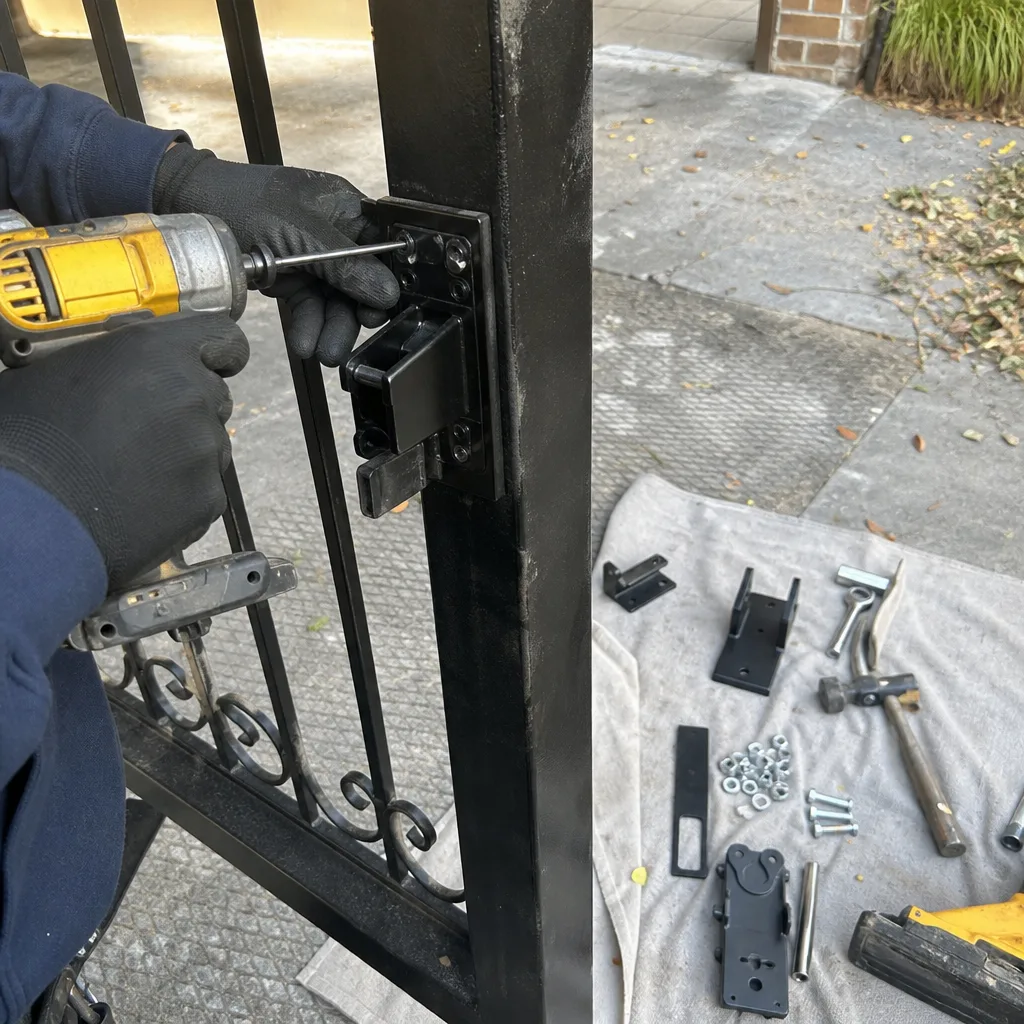
Fall is the most important season for Murphy gate maintenance, and the most ignored. The window is narrow: after the last 95-degree day, before the first sustained fall rain saturates the clay. What you do in October determines whether your gate survives the February ground shift without damage.
Here is the pre-winter checklist we recommend to every Murphy homeowner with an automated gate:
- Battery backup test: Unplug the operator or switch off its circuit breaker. Attempt to open and close the gate on battery power only. If the gate moves sluggishly, or the battery beeps a low-voltage warning, or it will not complete one full cycle, replace the battery. A replacement typically runs $80 to $180 depending on the model. Waiting until the power is out to discover the battery is dead means a gate that is either locked shut or locked open during an emergency.
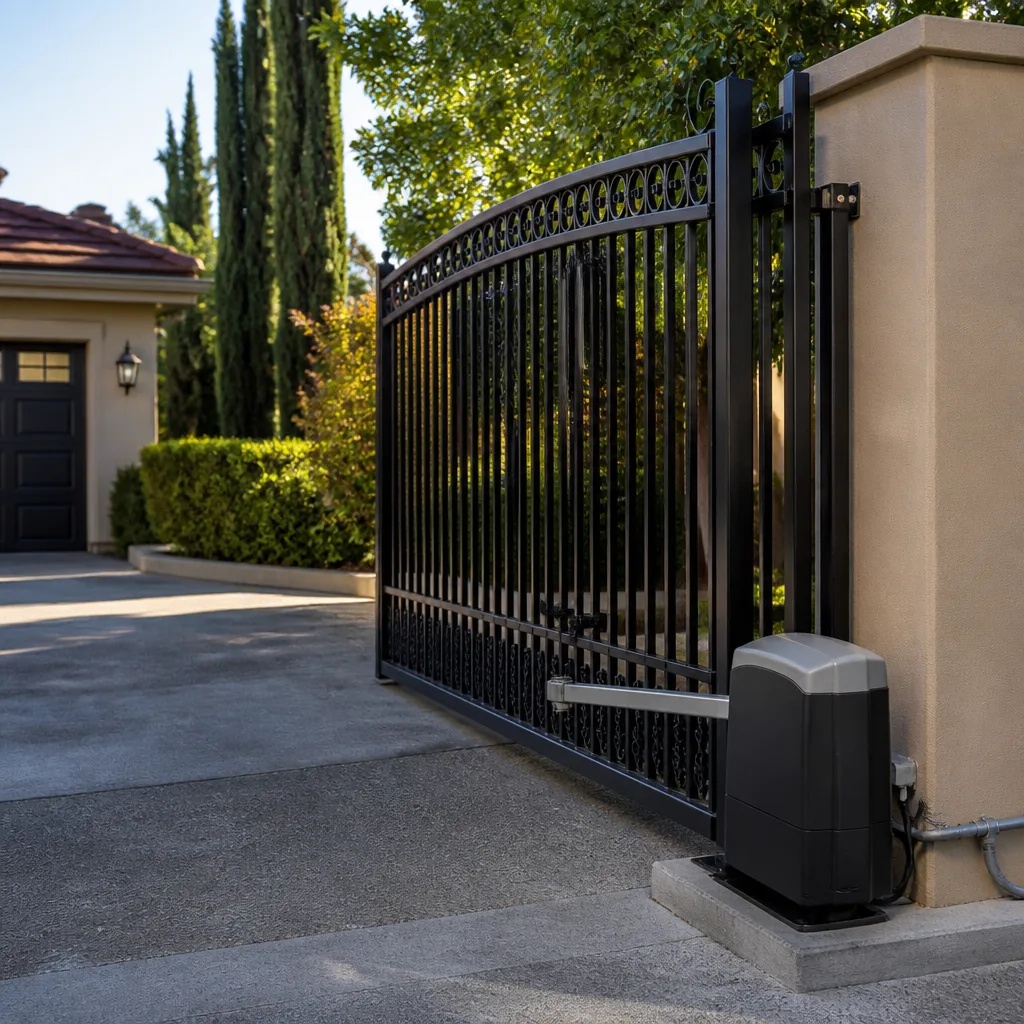
- Hinge torque: On swing gates, check every hinge bolt with a socket wrench. Bolts work loose over a summer of expansion and contraction. A hinge bolt that has backed out a quarter-turn changes the load path through the gate, and the motor absorbs the difference. Torque them to spec, and photograph the result. If a hinge is worn and sloppy, this is the time to replace it, not in February when the gate is frozen against a misaligned post.
- Ground moisture survey: Walk the area around each gate post after the first good fall rain. Look for water pooling at the base, or a visible depression forming where soil is washing away from the post. Murphy clay shrinks in summer drought and swells in fall rain. If water is pooling at the post base in October, that post will move in January. Grade the soil away from the post now.
- Track and roller inspection: For sliding gates, clean the track thoroughly. Check each roller for flat spots or wobble. A $35 roller replaced in October prevents a $300 track repair in March.
- Limit switch verification: Run the gate and verify it opens to the same position and closes to the same position every time. If the travel is inconsistent by more than an inch, the limit mechanism needs adjustment before wet-season soil movement makes the problem worse.
This is the part of gate care where the Haven Standard matters most. We write down what we find, what we adjust, and what the setting was before and after. When spring comes and something has moved, that written record shows whether the movement was there in October or developed over the winter. Most gate companies cannot tell you that. We can, because Vance Gate Repair Murphy home documentation practices come out of commercial access-control work, where every limit-switch reading and every torque value gets logged on a job sheet. Residential gates deserve the same record.
How to Keep a Seasonal Gate Log
The single highest-value habit a Murphy homeowner can develop is not a tool or a product. It is a notebook, or a notes app, with a gate log-one of more guides & resources we recommend. Two years of dated entries gives any future technician a picture of how your gate has moved, what has been serviced, and what failed before. Without it, every visit starts from zero and you pay for diagnosis that a log would have provided free.
Here is what to record, and when:
- After every heavy rain: Post plumb reading (bubble position photo), gate travel consistency, any new noise.
- After every storm with 40 mph or higher winds: Debris found in track or photo-eye path, remote range test result, any limit switch drift.
- On the first 100-degree day of summer: Inside-housing heat check, wire insulation feel test, motor start behavior.
- In October: Battery test result (cycles completed on battery), hinge bolt torque check, ground moisture observations at post bases.
- Any time a technician visits: Ask for the written record of what was adjusted and what was installed. If the technician will not provide one, that is a signal about the quality of the visit. Every Vance Gate Repair Murphy job includes a photographed record of findings and adjustments, left with the homeowner and filed in the job record under Haven Standard Clause 4.
At its most basic, the log is four lines per season. At its most useful, it is the difference between a technician who can diagnose in fifteen minutes and one who guesses for an hour and a half at your expense.
Understanding Your Gate Operator: The Components That Wear
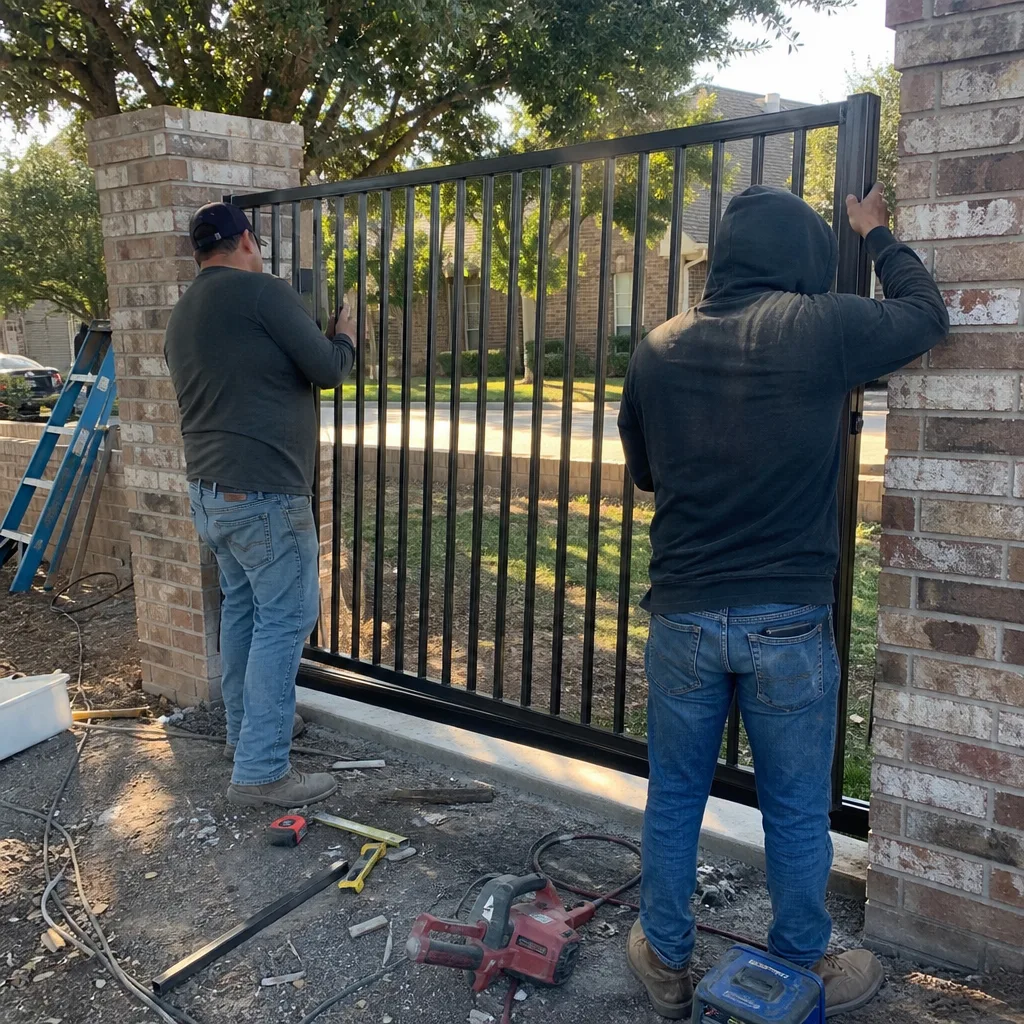
Gate operators are not complicated machines, but they have a handful of components that wear at predictable rates under Murphy conditions. Knowing what they are called and what they do means you can describe a problem accurately on the phone, which gets you a more accurate written estimate before anyone rolls a truck.
The Five Components That Matter Most
- Limit switches: These tell the operator where the gate stops. Mechanical limits use a physical cam or a screw adjustment. Magnetic limits use a sensor and a magnet on the gate. When a gate overtravels or stops short, the limit mechanism is the first suspect. A limit reset is usually a $95 to $160 service call, not a motor replacement.
- Safety devices: Photo-eyes (the infrared beam that stops the gate if something crosses the path), safety edges (the pressure-sensitive strip on the leading edge of the gate), and safety loops (underground wire loops that detect vehicles). These exist to prevent injury and property damage. They also fail in predictable ways: photo-eyes get misaligned, safety edges crack in UV exposure, loops break at the wire exit. Every one of these failures causes the gate to misbehave in a way that looks like a motor problem but is not.
- Control board: The brain. It reads the limits, the safety devices, and the remote input. Heat, moisture, and power surges are what kill control boards in Murphy. A control board replacement typically runs $300 to $600 depending on brand. Many are repairable by a technician who knows board-level work, which is rare in this trade.
- Capacitors: Start capacitors and run capacitors give the motor its power. They are consumable, like tires. They fail in heat. They are cheap to replace and frequently misdiagnosed as motor failure.
- Gear train and drive mechanism: Swing gates have an arm or a piston that pushes and pulls. Sliding gates have a chain or belt and a drive gear. The gear is usually plastic or composite and is designed to be the sacrificial component: it strips before the motor burns out. If your gate motor runs but the gate does not move, the drive gear is the likely cause. A drive gear replacement is $120 to $250 on most brands.
Murphy Gate Motors: What We See on FAAC, BFT, Linear, and Viking Units
Murphy homes have a mix of gate operators, and different brands have different personalities. We service nine brands including FAAC, BFT, Linear, and Viking, and each has a characteristic failure pattern under local conditions.
FAAC operators are popular on higher-end Murphy swing gates. They are hydraulic or electromechanical depending on model, and the hydraulic units in particular hold up well to heat. What we see on FAAC units in Murphy is limit drift, especially on older 400-series models where the mechanical limit adjustment wears over time. The fix is an adjustment and a record of the new limit position, which we photograph and log. FAAC units also benefit more than most from a fall battery check, because the control board draws a small standby current that eats battery life in heat.
BFT operators appear on many mid-range Murphy installations. The common BFT failure we document is gear wear in high-cycle applications, and capacitor failure in summer heat on the older models. BFT’s control boards are sensitive to power surges, which Murphy sees regularly during spring thunderstorms. A surge protector on the operator circuit is cheap insurance.
Linear operators, especially the slide gate models, are workhorses. The weakness we see is the limit mechanism and the safety loop inputs. Linear slide gates in Murphy that sit on reactive clay will drift out of limit alignment as the track shifts seasonally. The gate still works, but it stops off-position. The seasonal log catches this before the gate starts slamming its stops.
Viking operators are built for heavy gates and light commercial use. The weak point under Murphy heat is the housing ventilation. Viking housings are solidly built, which means they retain heat. The wire insulation and capacitors inside a Viking unit on a west-facing Murphy driveway live a hard life. We recommend the summer heat check described above for every Viking owner.
The point of naming these patterns is not to steer anyone toward a particular brand. It is to show that the operator you already have can almost always be repaired and kept running, as we explain in DIY vs Professional Gate Repair: The Murphy Homeowner’s Decision Guide, as long as the seasonal checks are done and the failures are caught at the component level. A worn gear or a drifted limit switch is a repair, not a replacement.
Common Mistakes to Avoid
- Ignoring the gate until it stops moving: By the time a gate will not open at all, the failure has usually had weeks or months of warning signs. The hesitations, the noises, the “sometimes it works” behavior were all diagnostic information that is now lost. Murphy’s climate means a working gate in October can be a non-working gate in February if the post drift was ignored.
- Replacing the motor first: More than half the “dead motor” calls we see in Murphy are not dead motors. They are limit switches, capacitors, photo-eyes, or control boards. Replacing a working motor because a $40 capacitor failed is an expensive way to learn which component actually failed.
- Skipping the fall battery test: Everyone who has a gate with a battery backup knows the battery exists and almost no one has tested it in the last year. The emergency is not the time to discover it is dead. Fall is.
- Clearing debris from the track but not checking the photo-eye after a storm: Debris removal is instinctive. Photo-eye alignment is not. Yet the photo-eye is the component most likely to be off after a Murphy wind event, and a misaligned photo-eye is the most common cause of a gate that starts to close and then reverses.
- Not keeping any record: When a gate fails, the owner calls a technician who has never seen the gate before, and the diagnostic clock starts at zero. A two-year seasonal log with photos and dated notes collapses that to minutes. The information is free. Not keeping it costs money every single visit.
- Adjusting the gate themselves after watching a video: Gate operators contain high-tension components and electrical hazards. A spring-loaded swing gate under load, or an operator with a charged capacitor, can cause serious injury. The seasonal checks in this guide are observational. Adjustments, wiring, and component replacement are professional work. We say this because we have seen the injuries and the destroyed operators.
- Accepting a verbal quote for work they have not seen: A gate problem described over the phone is not a gate problem diagnosed. Anyone who gives you a firm price without seeing the gate is guessing, and guesses become “unexpected additional work” invoices. The price should be written after the gate is inspected, before any work starts, and it should cover what will be done. That is Haven Standard Clause 1, and it is the only way we work.
When to Call a Professional
Call a professional when the gate has moved out of plumb by more than one bubble-width after a wet period. Call when the motor hums but does not move, when the gate overtravels or stops short repeatedly, when a photo-eye or safety edge shows visible damage, or when you find cracked wire insulation or a swollen capacitor inside the operator housing. Call before the problem becomes a full-motor failure, because a component-level repair is nearly always cheaper than what happens after weeks of running damaged.
Vance Gate Repair Murphy offers free estimates in Murphy, and every estimate is written, priced, and handed to you before any work starts. Call (469) 613-2832 and a live person answers. You will get a straight answer about what is wrong, what it costs to fix, and what we found when we opened the housing. No voicemail. No callback window. Just a technician who will tell you the truth and leave a written record when the job is done.
Frequently Asked Questions
Seasonal gate maintenance in Murphy typically runs $95 to $175 per visit, which covers the inspection, adjustments, and a written record of findings. Component replacements like capacitors, drive gears, or photo-eyes are additional and priced in writing before any work starts. Most seasonal issues caught early cost under $200 to correct. Call (469) 613-2832 for an exact written quote after we see the gate. Estimates are free.
A professional service visit twice a year, in October and April, covers Murphy’s two main stress seasons: the fall clay saturation and the spring storm period. In between, the homeowner checks in this guide take minutes and cost nothing. The combination of semi-annual professional service and seasonal homeowner checks is what keeps a Murphy gate reliable year-round.
Yes. Murphy’s clay soil absorbs water and expands, and that expansion exerts enough pressure to move a gate post measurably. We have documented quarter-inch to half-inch post drift over a single wet winter, with no freeze-thaw event involved. This is the single most common cause of winter gate binding in Murphy, and it is why the fall ground moisture survey matters.
The first sign is usually not a failure at all. It is a change: the gate opens slower than it used to, hesitates at the same point each cycle, or stops short and corrects itself. These are component-level symptoms, not motor death. A gate that still opens but behaves differently is often a limit switch, capacitor, or load issue, and those are repairable for far less than a motor replacement.
We service nine major automation brands including LiftMaster, FAAC, BFT, Linear, Viking, Ghost Controls, DoorKing, Elite, and Mighty Mule. If your motor is not on that list, we will still take a look and tell you honestly whether it is repairable. We do not steer customers toward replacement when a repair makes sense.
A written estimate from Vance Gate Repair includes the specific problem we found, the part numbers and labor involved in fixing it, the flat price, and the 365-Day Done Right Promise covering the work. It is handed to you before any work starts, and you will also receive a free second opinion on any written estimate from another company. Call (469) 613-2832 and we will schedule a time to look at the gate and put the price in writing.
The Bottom Line
Murphy’s gate problems are seasonal and predictable. Clay moves posts in winter. Wind damages photo-eyes and limit switches in spring. Heat kills capacitors and wire insulation in summer. The fall is your window to prepare for all of it. Four short seasonal checks, a simple log, and a professional visit twice a year will prevent most gate failures before they happen and catch the rest at the component level, where repairs cost a fraction of what neglect costs. The gate on your property is a machine with a maintenance schedule. Follow the schedule and it will outlast the fence around it. Ignore it and Murphy’s weather will find the weak point, usually at the worst possible moment.
Written by Adrian Vance, Owner at Vance Gate Repair Murphy, serving Murphy since 2014.