
Last updated September 20, 2026
Free on-site gate assessment - hinges, posts, and your LiftMaster or Nice gate operator checked before anything is quoted
The assessment is free and the quote is the invoice.

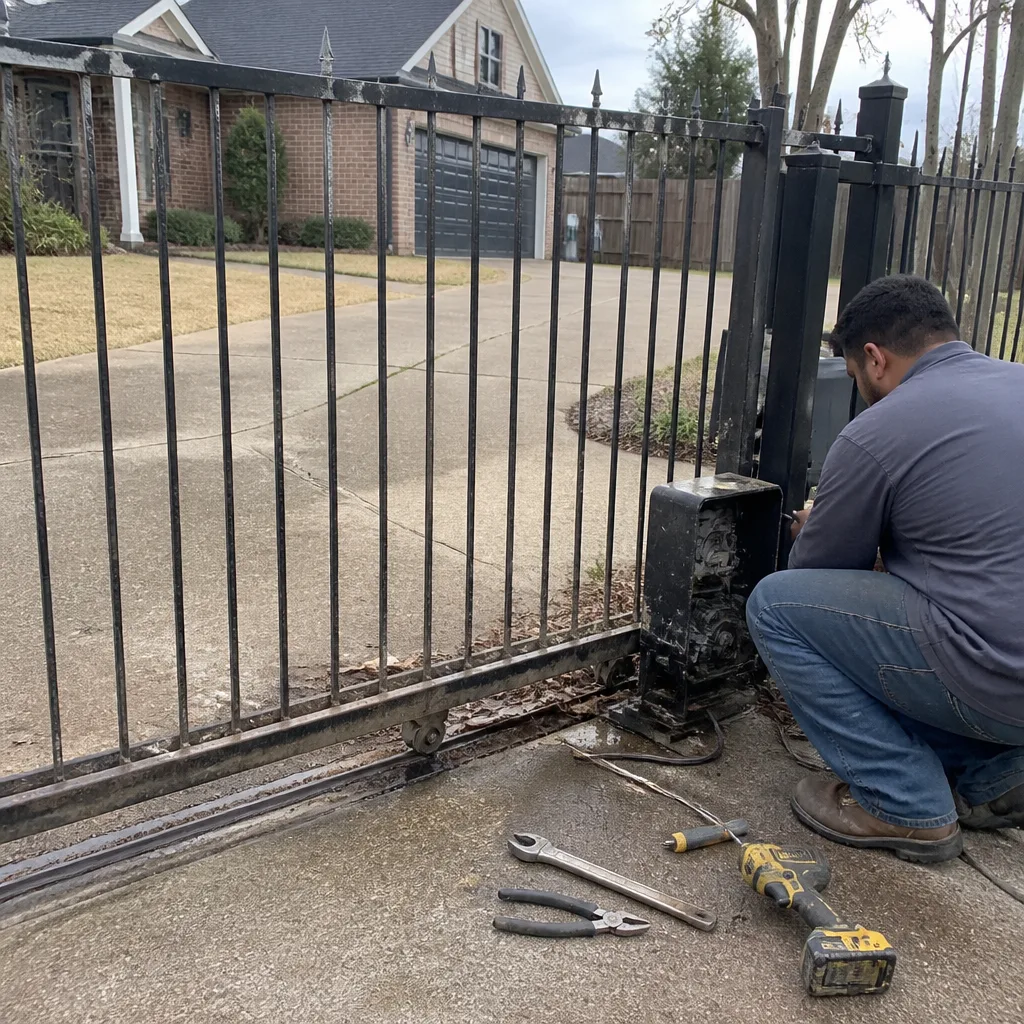 Before
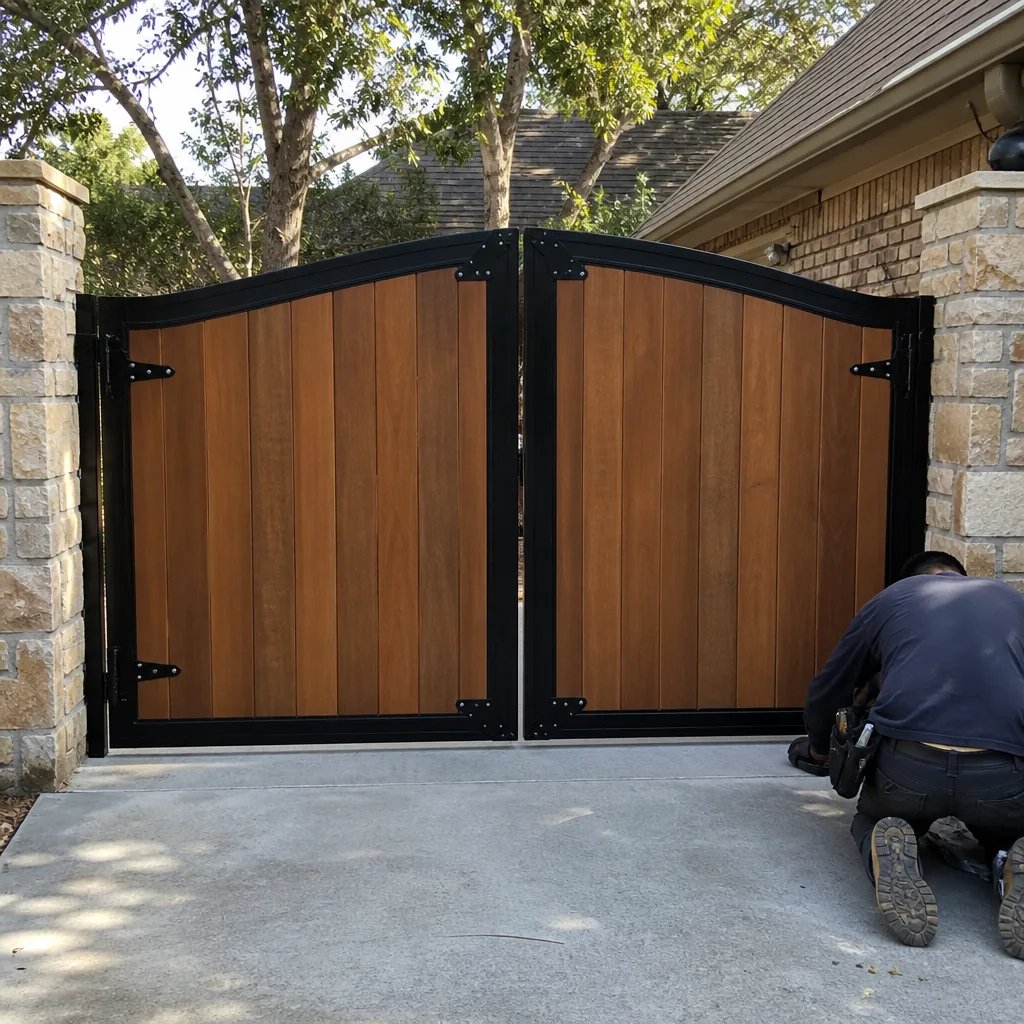 After
After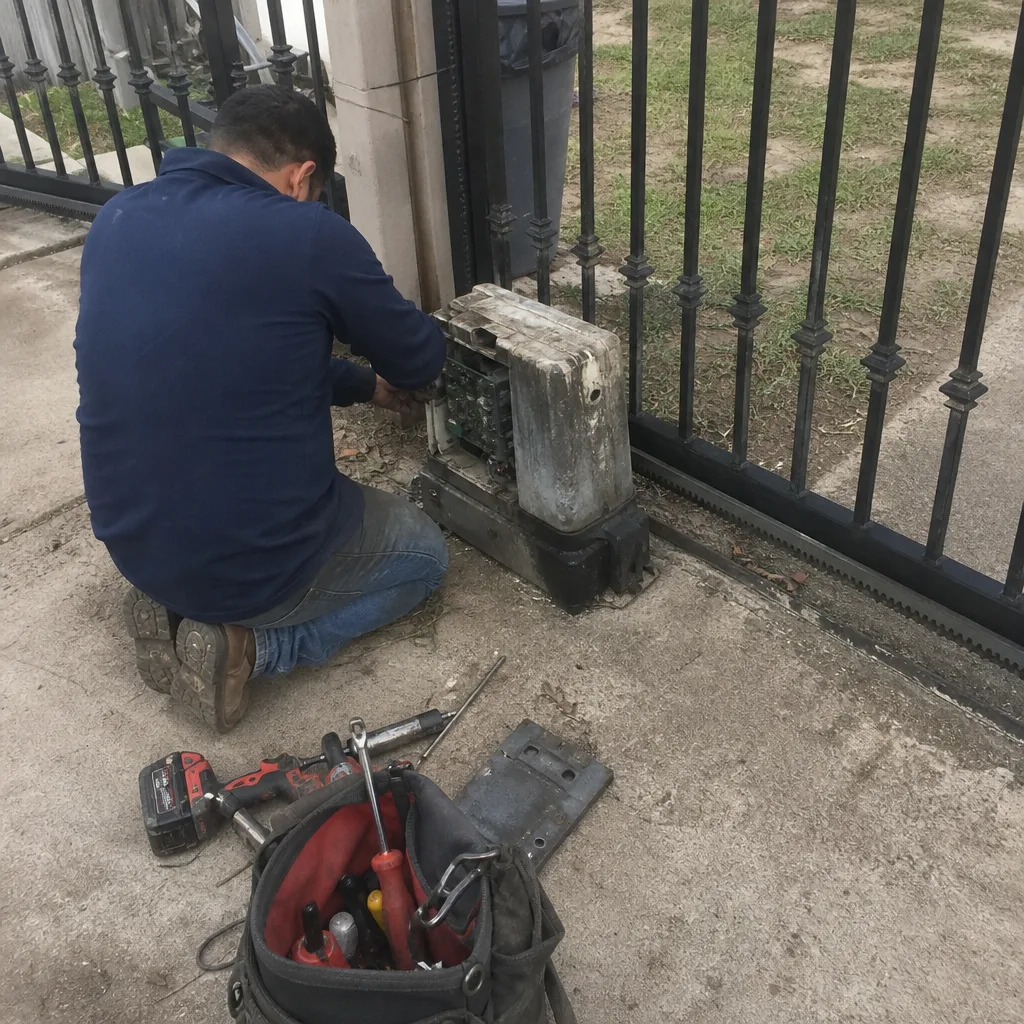 Before
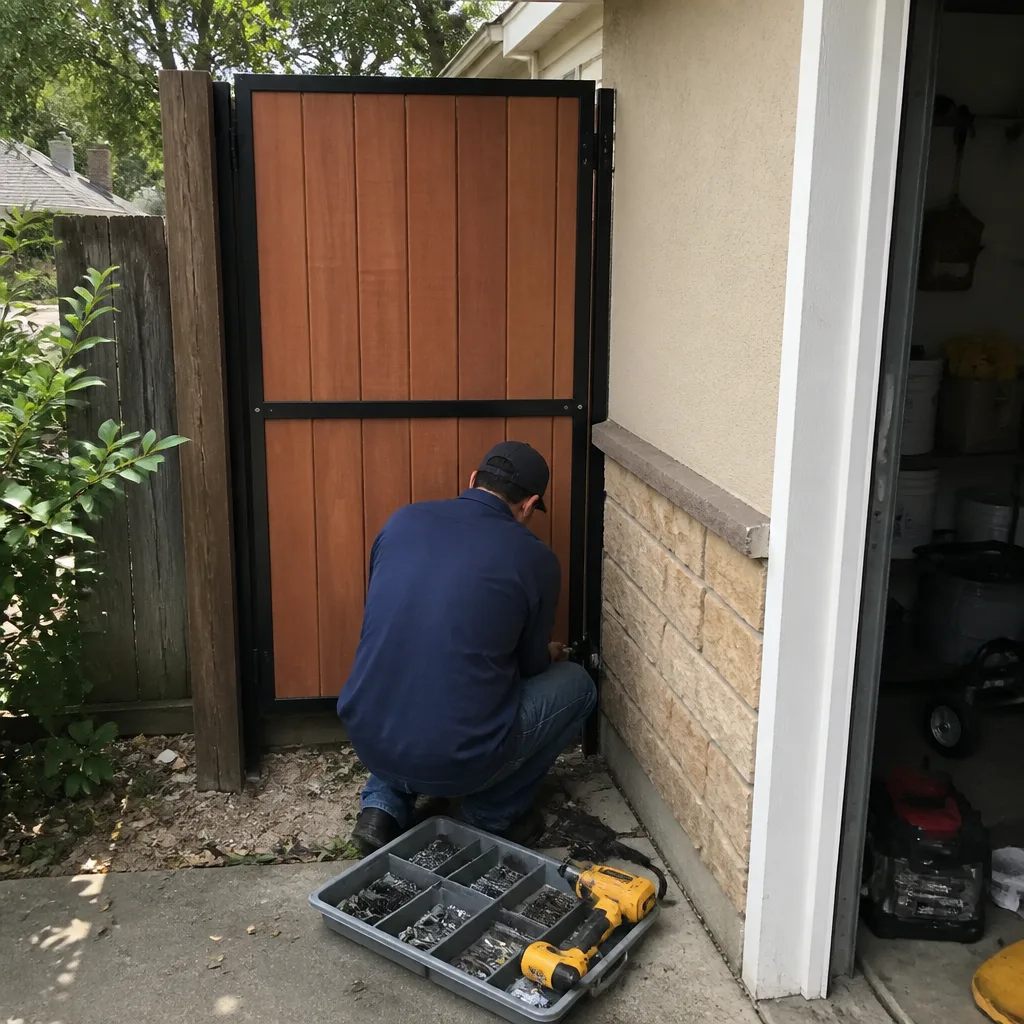 After
After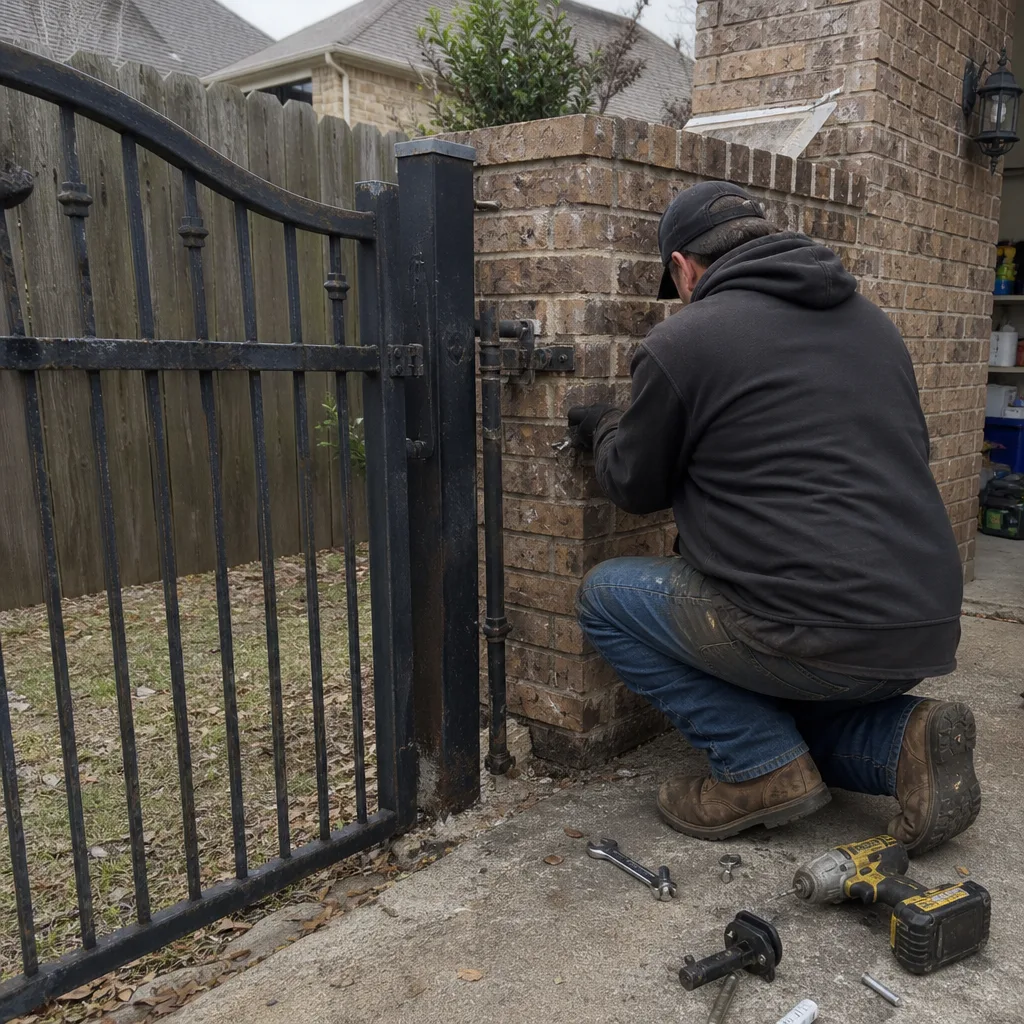 Before
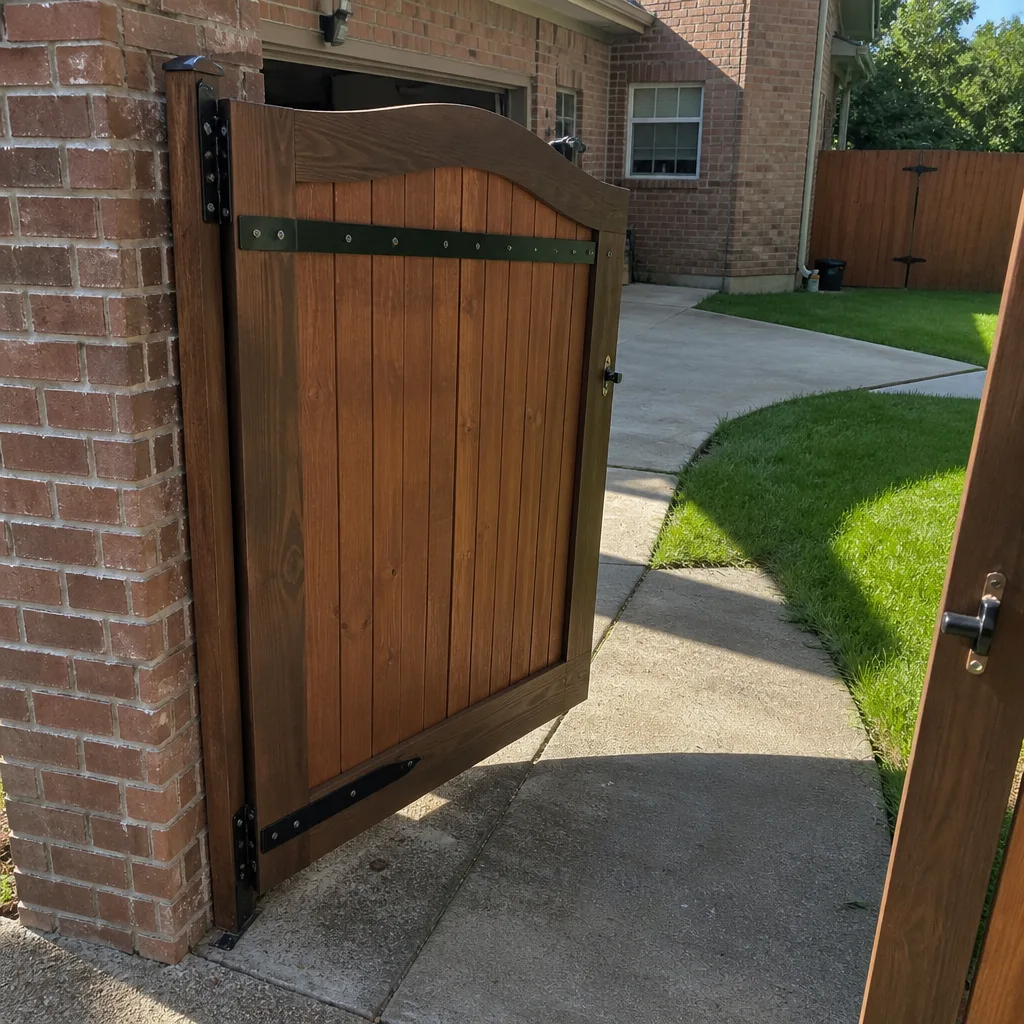 After
AfterThe Complete Guide to Gate Repair in Murphy
The most common reason a Murphy homeowner calls for gate repair a second time within 12 months isn’t a bad part. It’s that the first technician fixed the symptom and left the cause in place. A gate that won’t close gets a new limit switch, then fails again in spring because the real problem was a post that shifted with the clay soil and threw the geometry out of alignment. This guide walks through how a gate actually works as a system, how to diagnose what’s actually failing, what repairs cost in Murphy, and what documentation you should demand before anyone touches your property. For a deeper look at whether to tackle issues yourself or call in experts, see our DIY vs Professional Gate Repair: The Murphy Homeowner’s Decision Guide.
Quick Answer
Gate repair in Murphy TX typically costs between $180 and $340 for common fixes like limit-switch calibration, photo-eye realignment, or hinge shimming, while motor replacements run $700 to $1,600 depending on the automation brand and whether the mounting hardware is salvageable. Most repairs can be completed the same day once the technician confirms which component in the system has actually failed. The written price should be in your hand before any tool comes off the truck.
Table of Contents

- Understanding the Gate as a System, Not a Single Object
- Why Murphy’s Clay Soil Changes Everything About Gate Repair
- The Inspection Sequence: What a Technician Should Check First
- Written Scope of Work vs. Verbal Estimate: What Changes
- What Gate Repair Costs in Murphy
- How to Read the Wiring Diagram Left Behind
- Which Repairs Compound When Deferred and Which Can Wait
- Common Mistakes to Avoid
- When to Call a Professional
- Frequently Asked Questions
- The Bottom Line
BeforeAfterUnderstanding the Gate as a System, Not a Single Object
A driveway gate is a chain of components that all depend on each other. The operator, the hinge, the limit switch, the wiring, and the foundation each carry a share of the load. When one fails, the others usually show wear at the same time. A gate that reverses before fully closing might look like a limit-switch problem. But if the hinge has worn enough that the gate leaf sags three-quarters of an inch, the limit switch is being told the gate traveled farther than it actually did. The switch is fine. The hinge isn’t.
Here’s the chain, in the order force travels through it:
- The foundation and posts: They hold everything vertical and square. If they move, every measurement downstream changes.
- Hinges and pivot points: They carry the full weight of the leaf. Wear here translates directly into sag, which changes how the operator reads travel position.
- The operator and drive arm: It responds to the resistance it feels. Higher resistance means higher amp draw, which shortens motor life and triggers safety reversals.
- Limit switches and travel sensors: They tell the operator where the gate actually is. If the physical gate position drifts, the settings no longer match reality.
- Wiring, photo-eyes, and safety edges: Low-voltage signal paths that stop the gate when something is in the way. Corrosion, loose terminals, and rodent damage are common failure points in Murphy.
When we approach a repair, we start at the post and work toward the motor, not the other way around. That order matters because a motor can’t be calibrated correctly if the gate it’s driving is physically out of square. Fixing the symptom without addressing the cause is how a $200 repair becomes a $1,200 one six months later.
Why Murphy’s Clay Soil Changes Everything About Gate Repair
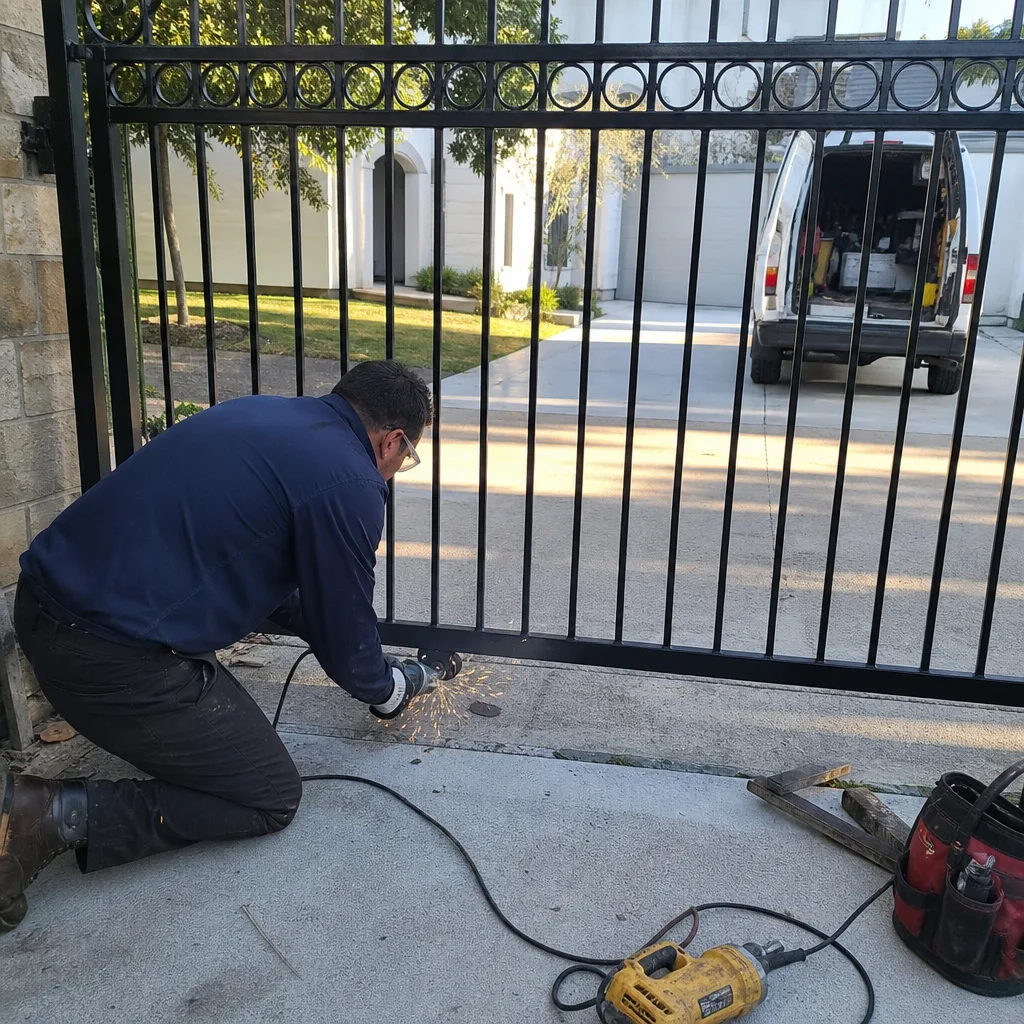
Murphy sits on expansive clay soil, the same high-plasticity clay that runs through much of Collin County. It swells when wet and shrinks when dry, and it does both seasonally. That movement transfers directly into gate posts set in concrete. A post that was plumb in March can be out by half an inch in August, and that half-inch at the base becomes a much larger displacement at the top of a seven-foot gate leaf.
What that means practically for any repair on a gate repair in Murphy project is that the technician should check post plumb before quoting any operator work. If the post has moved, the fix might be as simple as shimming the hinge or as involved as resetting the post in a deeper footing. But if you calibrate a motor to a gate that’s out of square, you’re calibrating to a moving target.
Signs that soil movement is affecting your gate:
- The gate scrapes the ground in one season but clears it in another.
- The gap between the two leaves at the center changes visibly over a few months.
- The latch or lock post no longer lines up and the gate needs to be lifted or pushed to engage.
- You hear a new grinding sound in dry weather that disappears after a heavy rain.
- Concrete around the post has developed a hairline crack that wasn’t there before.
This is Murphy-specific reality. A gate company working mostly on sandy soils in another region might never think to check it. A company that has worked on hundreds of gates across Murphy and neighboring Collin County communities sees it on a weekly basis and knows to look before quoting anything else.
The Inspection Sequence: What a Technician Should Check First
A proper gate diagnosis follows a specific order. Skip to the motor first, and you might replace a $600 board when the problem was a binding hinge the whole time. Here is the sequence we follow on every service visit in Murphy, and what the technician is looking for at each step:
- Post plumb and foundation integrity. Check the post with a level on two axes. Look for cracked concrete, soil gaps around the footing, and any sign the post has rotated. If the post isn’t square, nothing downstream can be trusted.
- Hinge load and leaf alignment. Lift the gate leaf slightly at the latch end. If there’s play measurable in inches, the hinge pins or bushings are worn. A gate that sags is a gate that will fight the operator on every cycle.
- Limit-switch calibration and travel stops. With the gate in manual mode, run it through a full cycle by hand and compare the physical travel against what the switches report. A limit switch set 12 degrees past physical travel will cause the motor to strain against the stop on every cycle, which burns out motors prematurely.
- Wiring continuity and junction integrity. Open the operator housing and check every terminal for corrosion, loose connections, or heat discoloration. Rodent damage and ant colonies inside operator boxes are common in Murphy’s climate and are often invisible until the housing is opened.
- Photo-eye alignment and safety-edge function. Misaligned photo-eyes are one of the most common causes of a gate that reverses for no reason. A two-inch misalignment can block the beam intermittently, causing behavior that looks random.
- Operator amp draw under load. The final check is the one that confirms everything upstream is correct. High amp draw on a properly aligned gate means the motor is working too hard, which points back to hinge binding or post settlement.
This order is not a preference. It’s a diagnostic discipline. Each step depends on the step before it being verified. Gate motor and opener repair in Murphy that skips the first two steps is a guess, not a diagnosis.
Written Scope of Work vs. Verbal Estimate: What Changes
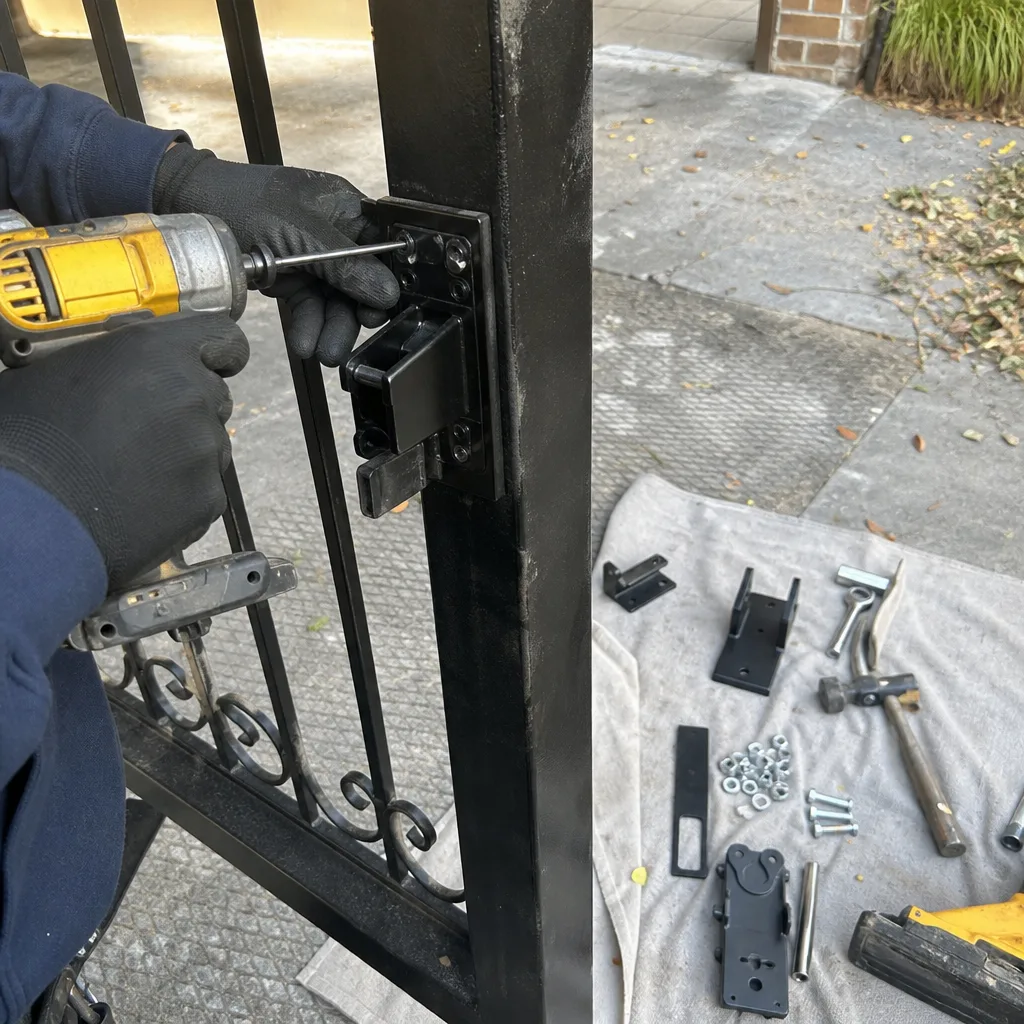
A verbal estimate tells you a number. A written scope of work tells you what that number buys, what the technician found, and what will be left behind when they leave. The difference matters more than most homeowners realize until something goes wrong and there’s no record of what the first technician actually did.
Here’s what a written scope of work for gate repair in Murphy should contain:
- What was found: The specific component that failed, with measurements if applicable. Not “motor issue” but “limit switch set 12 degrees past physical travel, post plumb confirmed at both axes.”
- What will be done: Step by step, including whether parts are new, used, or reconditioned, and what brand is being installed.
- What it costs: The total price, in writing, before the work starts. No ranges, no estimates, no “we’ll see how it goes.”
- What the warranty covers: The specific parts and labor window, in writing, including what’s excluded.
- What documentation you’ll receive: A photo log of every adjustment, a written record of part numbers installed, and wiring diagrams if anything in the circuit changed.
A verbal estimate typically omits most of that. It gives you a number without a record of what’s behind it. That’s not necessarily dishonest, but it’s incomplete. When a second technician comes later and has to guess at what the first one did, the homeowner pays to rediscover information that should have been documented on day one.
Under the Haven Standard, the written price and scope are handed over before any work begins. Every visit leaves a photographed record of what was found, what was adjusted, and what was installed. No future technician should ever have to guess. No homeowner should ever have to pay twice to learn the same thing.
What Gate Repair Costs in Murphy
Gate repair pricing in Murphy follows a fairly predictable pattern once you understand which system has failed. Here are the ranges we quote most often, based on the thousands of gates we’ve worked on in this region since 2014:
- Limit-switch calibration or photo-eye realignment: $180 to $280. This is the most common repair when the gate reverses, fails to close, or stops mid-travel. The part is rarely bad; usually it’s been knocked out of alignment or the settings drifted from post movement.
- Hinge shimming or bushing replacement: $220 to $400 depending on the weight of the leaf and whether the hinge must be removed to do the work properly. This repair often resolves the “grinding” sound that gets misdiagnosed as a motor problem.
- Control-board replacement: $450 to $900 depending on the automation brand. DoorKing and LiftMaster boards sit at different price points, and the board is only replaced after the mechanical systems upstream have been verified as sound.
- Swing-gate motor replacement: $700 to $1,600 depending on the brand, whether the arm bracket is intact, and whether the wiring pull is reusable. A Mighty Mule replacement runs on the lower end; a LiftMaster or Elite on the higher end.
- Full post reset with new concrete footing: $800 to $1,800 depending on access, soil condition, and whether the gate leaf must be removed to do it safely. This is the fix for recurring alignment issues that never seem to stay fixed.
Every price above is written down before the work starts. There’s no invoice at the end that doesn’t match what was agreed to before the first tool was picked up. That’s the point of written pricing: the number you approve is the number you pay.
If you’re looking at a full replacement rather than a repair, gate installation in Murphy carries different pricing dynamics, and a written quote for installation should list the gate, operator, power run, and safety equipment as separate line items.
How to Read the Wiring Diagram Left Behind
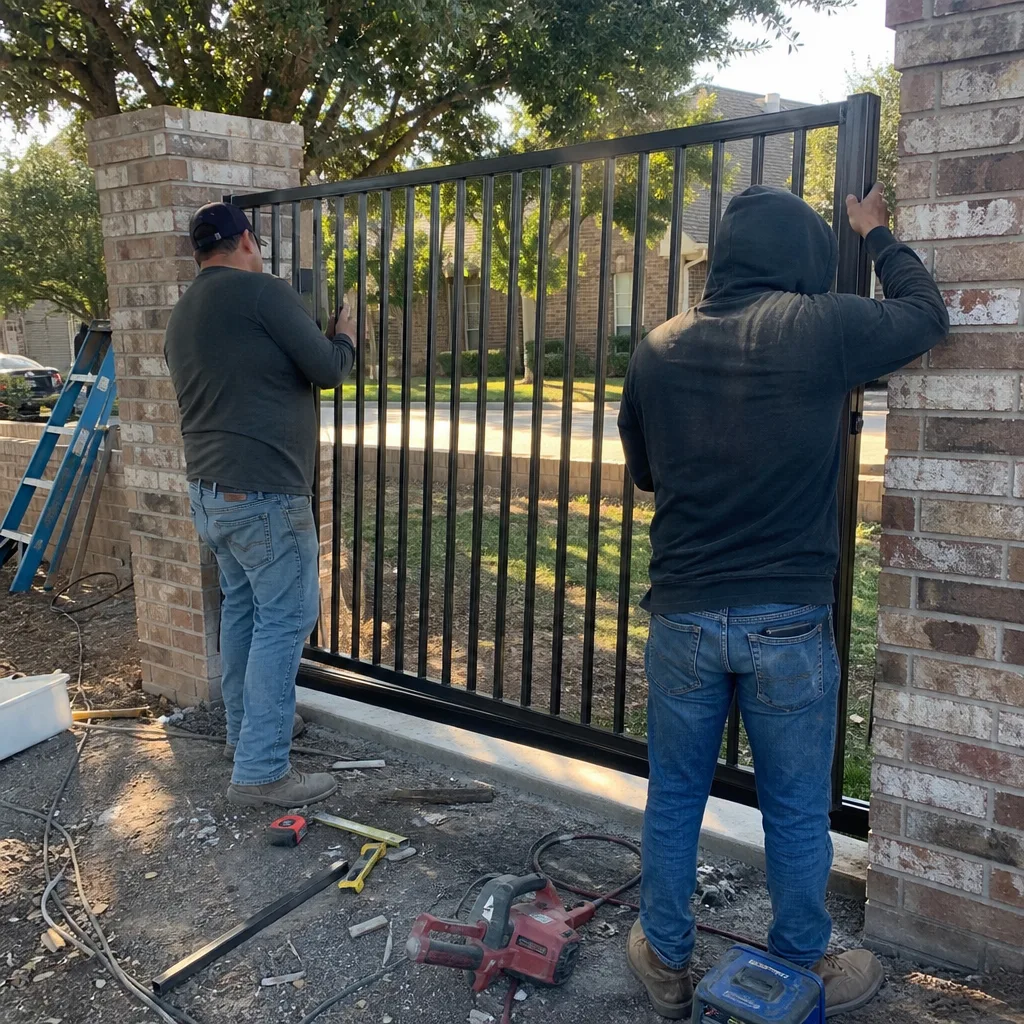
If a technician leaves you a wiring diagram, you have something most homeowners never get: a map of your gate’s nervous system. Here’s how to read the basics so you can describe your gate’s state accurately on any future call.
A standard residential gate control board will show terminals for:
- Power input: Usually labeled 120V or 240V, feeding the board through a fused or breakered disconnect.
- Motor output: The two or three terminals that drive the arm or operator motor. If these are noted as “verified continuity” on the diagram, that means the path was tested and is confirmed intact.
- Limit inputs: Terminals labeled LIMIT OPEN and LIMIT CLOSE. If the diagram notes “set 12 degrees past travel, corrected,” that’s your record that the switch was the problem and was recalibrated.
- Photo-eye inputs: Usually labeled PHOTO or SAFETY. If the note says “beam blocked at 2-inch misalignment, realigned,” you know the safety reversing issue was optical, not mechanical.
- Accessory outputs: Keypad, telephone entry, or intercom connections. These should be labeled clearly enough that a different technician can verify them without pulling each wire.
The value of this diagram isn’t just for the next technician. It’s for you. If the gate acts up in nine months, you can open the housing, look at the diagram, and tell the person on the phone, “The limit-open terminal was adjusted in March and reset, but the gate is stopping short again.” That’s a better starting point than “it’s not working.”
You won’t get this diagram from every company. You should get it from ours, because the photo log and the written record are part of the job, not an upsell. That’s been true in this business since Adrian Vance started carrying the documentation habit over from commercial access-control work in 2014.
Which Repairs Compound When Deferred and Which Can Wait
Not every gate problem is urgent. Some are. Knowing the difference is the difference between a $280 repair and an $1,800 one six months later.
Repairs that compound when deferred:
- Hinge wear and leaf sag: A sagging gate puts constant strain on the operator motor and the drive arm. Every cycle accelerates the wear. A $250 hinge bushing replacement deferred for six months often becomes a $900 motor replacement.
- Post movement and foundation cracking: Once a post starts moving, the movement accelerates as the soil cycles through wet and dry seasons. A post that’s a quarter-inch out in May can be an inch out by October in Murphy’s clay.
- Limit-switch drift: If the gate occasionally slams into the stop or reverses before closing, the limit settings are off. Each slam stresses the gearbox and the welding on the leaf frame. The switch calibration is cheap. The damage it causes isn’t.
- Photo-eye misalignment that causes reversing: Intermittent reversing isn’t just annoying. It means the gate is seeing phantom obstructions and reversing under load. The reversing itself adds motor hours and heat. Fix the alignment early.
Repairs that can safely wait six months:
- Cosmetic weld cleanup or surface rust on a non-structural component: If it’s not load-bearing and it’s not affecting the gate’s travel, it can wait. Surface rust on a decorative finial doesn’t compromise the leaf’s integrity.
- A keypad that works intermittently but the primary opener works reliably: If you can open the gate from the main remote or the manual release, a flaky keypad is a convenience issue, not a safety or security one.
- Faded or worn finish on the gate leaf: Purely cosmetic. Doesn’t affect function.
- Operator that’s noisy but still within normal amp draw: Some operators are louder than others, especially older ones. If the amp draw is within spec and the gate travels fully, the noise may not indicate imminent failure. The inspection should confirm this before you decide to wait.
The pattern is simple: anything that changes the physical alignment of the gate or adds stress to the motor compounds. Anything purely cosmetic waits. When in doubt, have the system inspected and get the finding in writing. That’s what the documentation is for.
Common Mistakes to Avoid
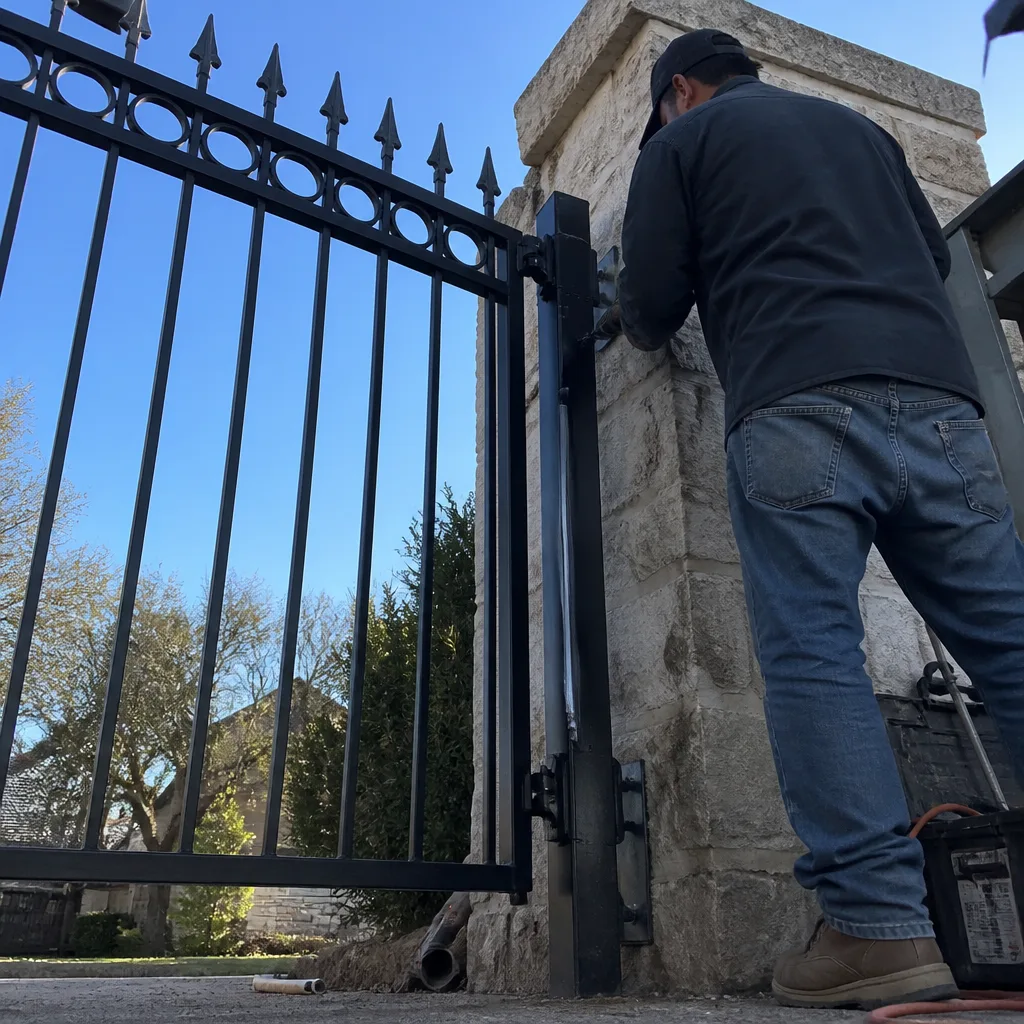
- Replacing the motor before checking the hinges. A binding hinge can draw enough amps to burn out a new motor within a year. The motor is often the victim, not the culprit. Check the mechanical path first.
- Accepting a verbal estimate without a written scope. If the price isn’t written down with the specific work described, there’s no record of what was agreed to. In Murphy, the best gate work is documented work.
- Ignoring seasonal post movement. Murphy’s clay swells and shrinks every year. If your gate scrapes in summer but clears in winter, the post has moved. Don’t accept a “just adjust the wheels” fix; address the cause.
- Lubricating a noisy hinge without addressing the wear. Grease makes a worn hinge quieter for a few weeks. It doesn’t restore the bearing surface. The noise will return, and by then the wear will be worse.
- DIY limit-switch adjustments on a gate under tension. The drive system and counterbalance components on a gate under load can release suddenly. This is not a weekend project. The limit settings should be done by someone who understands the operator’s full travel path.
- Replacing a board without recording the original settings. A new control board with the wrong limit configuration can slam the gate into the stops on the first cycle. The original settings should be photographed and transferred, not guessed at.
- Choosing a company that pushes replacement before diagnosis. Some operators, including DoorKing and Elite models, can run for another decade with a $200 part. If the first recommendation is a full motor or gate replacement without a written diagnosis of the existing system, get a second opinion. We offer a free second opinion on any written estimate from another company in Murphy. Bring the paperwork and we’ll review it at no cost.
When to Call a Professional
Call a professional when the gate reverses mid-travel, stops short of the fully open or closed position, makes a grinding noise that changes with temperature, or shows visible sag at the latch end. These are mechanical or calibration problems that won’t resolve themselves, and several of them involve components under tension that can cause serious injury if mishandled. Post movement in Murphy’s clay soil is another trigger: if the concrete around the post is cracking or the gate scrapes in one season and clears in another, the fix requires resetting the post properly, which is not a weekend project. Vance Gate Repair Murphy offers free written estimates in Murphy. Call (469) 613-2832 and a live person will answer, any hour, any day.
Frequently Asked Questions
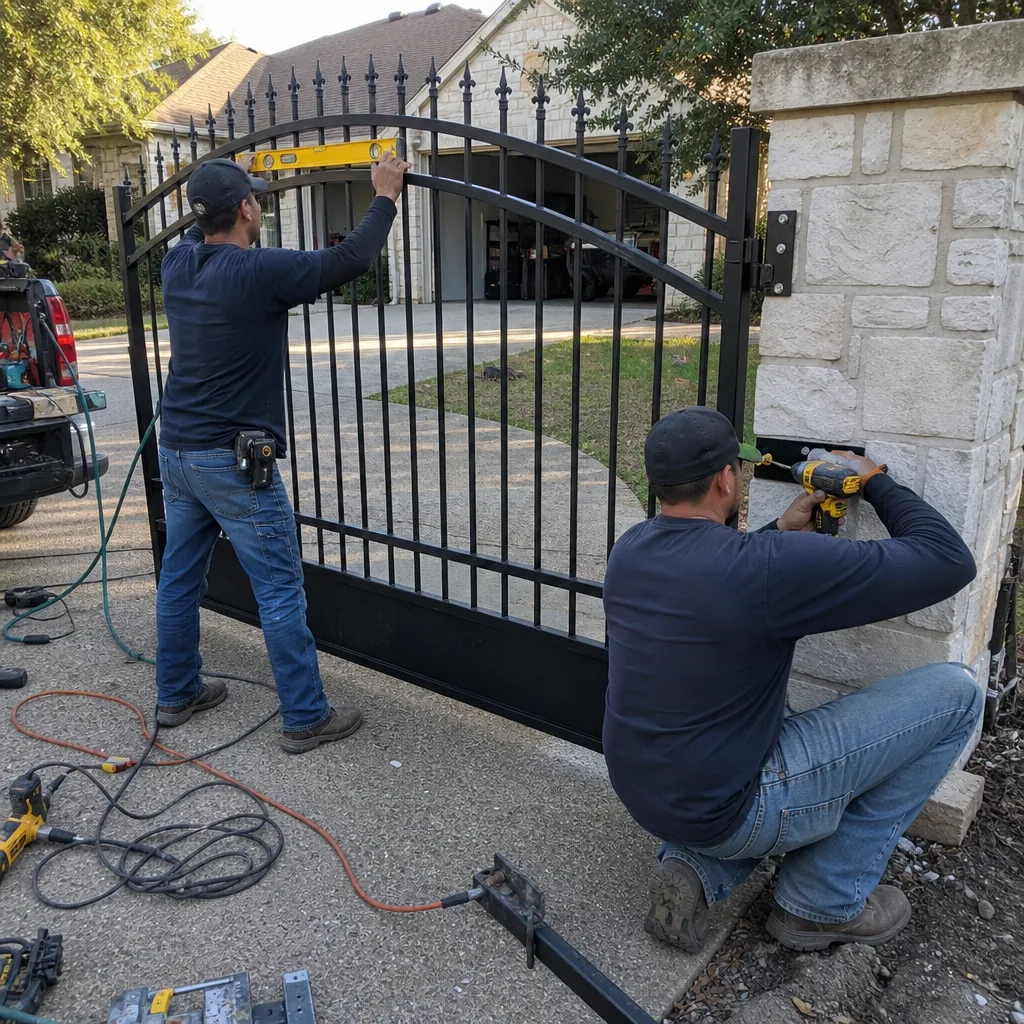
Most gate repairs in Murphy cost between $180 and $340 for common fixes like limit-switch calibration, photo-eye realignment, or hinge shimming. Motor replacements run $700 to $1,600 depending on the brand and whether the mounting hardware is intact. The price you’re quoted should be in writing before the work starts, and the final invoice should match it. Call (469) 613-2832 for an exact written quote. Estimates are free.
Most gate repairs in Murphy, including limit-switch recalibration, photo-eye realignment, and hinge bushing replacement, are completed the same day. The technician confirms the failed component, writes the scope and price, and completes the work on that first visit in most cases. Some repairs requiring a reset post or a specialized control board may take longer, but the written scope will say so before anything starts. Call (469) 613-2832 to explain what your gate is doing and get a same-day assessment.
A gate that reverses before fully closing is usually seeing something that isn’t there: a photo-eye misaligned by as little as two inches, or a limit switch that’s drifted out of calibration. The operator interprets the signal as an obstruction and reverses. Less commonly, a binding hinge increases the amp draw and triggers the motor’s internal thermal protection. The fix starts with a system inspection that rules out each possibility in order. Call (469) 613-2832 for a written diagnosis in Murphy.
We service nine major automation brands, including DoorKing, Elite, Mighty Mule, and LiftMaster, plus FAAC, BFT, Linear, Viking, and Ghost Controls. If the motor on your property is one of those, we can work on it without steering you toward a replacement you don’t need. The diagnosis is brand-specific: each control board has its own terminal layout and calibration procedure, and the written record you receive will reflect what was actually installed and set.
Murphy’s expansive clay soil swells when wet and shrinks when dry. In a dry Texas summer, the soil contracts and the gate post can tilt outward, dropping the latch end of the leaf enough to scrape the driveway. When rain returns, the soil swells and the gate lifts back to clearance. The fix is correcting the post alignment and, in some cases, resetting it in a deeper or wider footing. The seasonal pattern is a symptom of a post that’s no longer locked into the soil, not a problem with the gate leaf itself.
A written gate repair estimate in Murphy should list what was found, what will be done, the exact price, the warranty terms, and the documentation you’ll receive when the job is done. The documentation should include a photo log of every adjustment and a written record of every part number installed. If the estimate is verbal and there’s no written scope, there’s no record of what was agreed to. Under the Haven Standard, the written price and scope are handed over before any work begins, every time. Vance Gate Repair Murphy offers free written estimates. Call (469) 613-2832 to schedule one.
The Bottom Line
Gate repair in Murphy is a system problem, not a part problem. The post, the hinge, the limit switch, the wiring, and the motor all affect each other, and Murphy’s clay soil adds a seasonal variable that most generic gate advice ignores. A repair that doesn’t start with post plumb and hinge load is a guess, and a guess that skips the cause only guarantees a second service call. The fix is a written scope of work that documents what was found, what was done, and what it cost, before the work starts. That’s the standard we’ve kept at Vance Gate Repair services Murphy since 2014, and it’s the standard every homeowner in Murphy should expect from any gate company they invite onto their property.
If your gate is acting up, call (469) 613-2832. A live person answers. The estimate is free and it’s in writing.
Written by Adrian Vance, Owner at Vance Gate Repair Murphy, serving Murphy since 2014. Explore more guides & resources on our blog.